
Caponata is one of those timeless dishes that embodies the essence of Sicilian cooking. With its rich history, vibrant flavors, and versatility, this vegetable-based dish has captured the hearts of many. Whether served as a starter, side dish, or even a light main, Caponata brings together the perfect balance of sweet and sour, making it a memorable addition to any meal.
In this article, we’ll explore everything there is to know about Caponata—its origins, key ingredients, regional variations, and how to prepare it. Let’s dive into the world of this flavorful Sicilian delight.
What Is Caponata?
A Traditional Sicilian Dish with a Sweet and Sour Twist
Caponata is a vegetable stew that originates from Sicily, Italy. It features a blend of vegetables such as eggplant, tomatoes, onions, and celery, all simmered in a tangy, agrodolce sauce (a balance of sweet and sour). The dish has a distinctive flavor profile due to the inclusion of ingredients like olives, capers, and pine nuts, which add depth and complexity to the dish.
In its simplest form, Caponata is a combination of fried vegetables tossed together with a vinegar-based sauce to achieve that signature tang. It’s the perfect balance of flavors, with sweet elements from raisins or sugar and acidity from vinegar or tomatoes.
Origins and Historical Significance
Tracing Caponata’s Roots in Sicilian Cuisine
The word “Caponata” is believed to come from the Sicilian dialect word “caponata,” meaning “dish with sauce” or “sauce-based dish.” Some scholars believe the dish was created with capon (a type of rooster), the main protein used in the recipe before the modern vegetable-based version took over.
Historically, Caponata was seen as a peasant dish, designed to make use of whatever vegetables were in season. In the hot Sicilian climate, this dish became a practical solution to preserving vegetables, particularly the popular eggplant. It’s said that Caponata was often enjoyed as a light meal or a savory accompaniment to bread.
The unique mix of sweet and sour flavors reflects the influence of various cultures that have shaped Sicilian cuisine, including the Arabs, who introduced sugar and vinegar to the region. Over time, Caponata evolved into the iconic dish it is today—an essential part of Sicilian culinary tradition.
In Part 2, we will dive into the core ingredients that make Caponata so special, exploring the essential vegetables and flavor enhancers that form the backbone of this dish.
Core Ingredients of Caponata
Caponata’s charm lies in its simple yet flavorful ingredients. It’s a dish that highlights the natural taste of vegetables, with a few added touches to elevate the overall flavor. Let’s take a closer look at what makes up this classic Sicilian dish.
Essential Vegetables
Caponata wouldn’t be Caponata without the vegetables. The key ingredients here are:
Eggplant (Aubergine)
Eggplant is the star of Caponata. It’s soft, rich in flavor, and absorbs all the wonderful seasonings. It’s usually cut into cubes and fried until golden brown, giving it a nice texture.
Tomatoes
Fresh tomatoes add a burst of tangy sweetness. They break down during cooking and mix beautifully with the other ingredients.
Celery
Celery adds a nice crunch and freshness to the dish. It balances out the richness of the fried vegetables, offering a crisp contrast.
Onions
Onions bring a savory, sweet depth to Caponata. When sautéed, they caramelize slightly and blend well with the other flavors.
Flavor Enhancers
While the vegetables are the base of Caponata, there are a few key ingredients that give it its signature flavor.
Olives and Capers
Olives, especially green ones, bring a briny, salty kick. The capers add a touch of sharpness, balancing the sweetness of the tomatoes and raisins.
Pine Nuts and Raisins
Pine nuts give a nice crunch, while raisins provide a hint of natural sweetness. These ingredients are key in giving Caponata its distinct sweet-and-sour flavor.
The Agrodolce Sauce
The agrodolce sauce is what sets Caponata apart. It’s made by combining vinegar (usually red or white wine vinegar) and sugar, along with a bit of salt. This sauce gives the dish its signature tangy sweetness.
The balance of sweet and sour is crucial. Adjusting the vinegar and sugar can help you achieve the perfect harmony, depending on your taste.
Next, we’ll explore the regional variations of Caponata, showing you how different parts of Sicily, and beyond, put their unique spin on this iconic dish.
Regional Variations of Caponata
Caponata isn’t just one dish—it has different versions across Sicily. Each region has its twist, based on local ingredients and preferences. Let’s take a look at some of the most popular variations.
Caponata alla Palermitana
The Classic Version from Palermo
This version is the most well-known and is considered the classic. It features eggplant, tomatoes, onions, and celery, just like the traditional recipe. However, Palermitana Caponata often includes a more pronounced sweet-and-sour sauce and is known for its rich, savory depth. It’s typically served as a side dish or appetizer, often paired with bread.
Caponata Catanese
Distinctive Ingredients and Preparation
Caponata from Catania, a city on the eastern coast of Sicily, has its charm. It uses more tomatoes than other versions, making the sauce thicker and richer. Catanese Caponata also includes pine nuts and raisins, but it may be slightly less sweet than its Palermo counterpart. The dish is usually served warm or at room temperature.
Other Sicilian Variants
Caponata Agrigentina, Trapanese, and Messinese
Different areas in Sicily add their unique twist to Caponata:
-
Agrigentina: This version includes more olives, giving the dish a bolder, saltier flavor.
-
Trapanese: Known for using fresh basil and sometimes almonds, it adds a herby freshness.
-
Messinese: Includes a bit of hot pepper, making it slightly spicier than other varieties.
International Interpretations
Malta’s Kapunata and Other Mediterranean Adaptations
Beyond Sicily, Caponata has made its way to other parts of the Mediterranean. In Malta, it’s called Kapunata, and it’s very similar to the Sicilian version. Other regions have added their local ingredients, like zucchini or bell peppers, but the sweet-and-sour base remains a common thread.
How to Prepare Caponata
Making Caponata is simple, but it does take some time to get all the flavors just right. Here’s a step-by-step guide to preparing this delicious Sicilian dish.
Step-by-Step Cooking Instructions
Preparing the Vegetables
Start by washing and chopping the vegetables.
-
Eggplant: Cut into small cubes. You can salt the cubes to remove excess moisture before frying.
-
Tomatoes: Cut them into chunks or crush them if you prefer a smoother sauce.
-
Onions and Celery: Slice the onions thinly and chop the celery into small pieces.
Frying the Vegetables
Heat olive oil in a pan and fry the eggplant cubes until golden. Once fried, set them aside on paper towels to absorb any excess oil. Next, sauté the onions, celery, and tomatoes in the same pan until soft and fragrant. This helps build the flavor.
Cooking the Sauce
In a separate small pan, combine vinegar, sugar, and a pinch of salt to create the agrodolce sauce. Stir it until the sugar dissolves. Once the sauce is ready, pour it over the cooked vegetables and add the olives, capers, raisins, and pine nuts. Mix everything together well.
Let It Simmer
Let the mixture simmer on low heat for about 10 minutes. This allows the flavors to blend. Be sure to taste and adjust the seasoning, adding more vinegar, sugar, or salt as needed.
Presentation and Serving Suggestions
Caponata can be served warm, cold, or at room temperature. It’s perfect as a side dish or a topping for bread. You can even serve it with pasta or as part of a larger meal.
Next, we’ll look at the nutritional profile of Caponata and how this dish can be a healthy choice.
Nutritional Profile and Health Benefits
Caponata is not only delicious but also offers a variety of health benefits. Let’s break down the nutritional aspects and why this dish is a great choice for your diet.
Nutritional Breakdown
Caponata is made with fresh vegetables, so it’s naturally low in calories. A typical serving contains:
-
Calories: About 150-200 per serving, depending on the amount of oil used.
-
Fat: Most of the fat comes from olive oil, which is a healthy fat.
-
Carbohydrates: It’s rich in fiber, especially from eggplant and tomatoes.
-
Protein: While Caponata isn’t a protein-heavy dish, the pine nuts add a small amount.
Health Benefits
Caponata is full of antioxidants, thanks to its vegetables and olive oil. Eggplant, for example, is known for its ability to support heart health and lower cholesterol.
-
Eggplant: High in fiber and low in calories, great for digestion.
-
Olives and Capers: Rich in healthy fats, which are good for your heart.
-
Tomatoes: Packed with vitamin C and lycopene, which help fight free radicals in the body.
Dietary Considerations
Caponata is perfect for several diets:
-
Vegan: It contains no animal products.
-
Gluten-Free: It’s naturally gluten-free, making it suitable for those with gluten sensitivities.
-
Low-Calorie: It’s a light, healthy choice for anyone watching their calorie intake.
In Part 6, we’ll answer some common questions about Caponata, including how to store it and how to make it in advance.
Common Questions About Caponata
Caponata is a versatile dish, and people often have questions about how to make, store, and serve it. Let’s address some of the most common ones.
Can Caponata Be Made in Advance?
Yes, Caponata tastes better after sitting for a few hours or even overnight. The flavors have time to blend and develop, making it even more delicious. You can easily prepare it a day ahead and refrigerate it until you’re ready to serve.
How Should Caponata Be Stored?
Caponata can be stored in an airtight container in the fridge for up to 4 days. If you want to keep it longer, you can freeze it. Just make sure to let it cool completely before freezing. When ready to eat, defrost and reheat it gently.
Is Caponata Suitable for Special Diets?
Yes, Caponata is a great option for many diets:
-
Vegan: It contains no animal products.
-
Gluten-Free: It’s naturally gluten-free, so it’s safe for those with gluten sensitivities.
-
Low-Calorie: It’s light, making it a good choice for people on a calorie-restricted diet.
Next, we’ll wrap things up with a conclusion, reflecting on the versatility of Caponata and encouraging you to try it out in your kitchen.
Conclusion
Caponata is more than just a dish—it’s a taste of Sicily. With its combination of vegetables, sweet and sour flavors, and simple ingredients, it’s easy to make and enjoy. Whether you serve it as a side dish, appetizer, or main course, it’s a great addition to any meal.
This dish is not only full of flavor but also packed with nutrients. It’s perfect for anyone following a vegan, gluten-free, or low-calorie diet. Plus, it’s easy to prepare in advance, so you can enjoy it whenever you like.
Print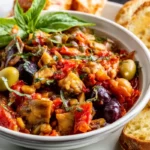
Caponata: A Classic Sicilian Dish with a Sweet and Sour Twist
- Total Time: 50 minutes
- Yield: 4 servings 1x
- Diet: Vegan
Description
Caponata is a classic Sicilian dish that blends the perfect balance of sweet and sour flavors. It’s a vegetable-based stew with a rich history, featuring eggplant, tomatoes, onions, and celery in a tangy agrodolce sauce. The dish is both versatile and delicious, often served as a starter, side dish, or light main course.
Ingredients
-
2 medium eggplants, cut into cubes
-
2 ripe tomatoes, chopped
-
1 large onion, sliced
-
2 celery stalks, chopped
-
1/4 cup green olives, pitted
-
2 tbsp capers
-
1/4 cup pine nuts
-
1/4 cup raisins
-
1/4 cup red or white wine vinegar
-
2 tbsp sugar
-
2 tbsp olive oil
-
Salt and pepper to taste
Instructions
-
Prepare the Vegetables
-
Cut the eggplant into cubes and salt them to remove excess moisture.
-
Chop the tomatoes, slice the onions, and chop the celery.
-
-
Fry the Vegetables
-
Heat olive oil in a pan and fry the eggplant cubes until golden. Set aside to drain on paper towels.
-
In the same pan, sauté the onions, celery, and tomatoes until softened.
-
-
Prepare the Agrodolce Sauce
-
In a separate pan, combine vinegar, sugar, and salt. Stir until the sugar dissolves to form the sauce.
-
-
Combine and Simmer
-
Add the fried eggplant, olives, capers, raisins, and pine nuts to the pan with sautéed vegetables. Pour the agrodolce sauce over and mix well.
-
Let the mixture simmer on low heat for 10 minutes to blend the flavors.
-
-
Serve
-
Serve Caponata warm, cold, or at room temperature as a side dish, appetizer, or with pasta.
-
Notes
Caponata tastes even better after sitting for a few hours or overnight, as the flavors develop.
This dish can be made in advance and stored in an airtight container in the fridge for up to 4 days.
You can adjust the sweetness or acidity by modifying the vinegar and sugar levels to suit your taste.
- Prep Time: 20 minutes
- Cook Time: 30 minutes
- Category: Side dish, appetizer, main course
- Method: Stove-top
- Cuisine: Sicilian (Italian)