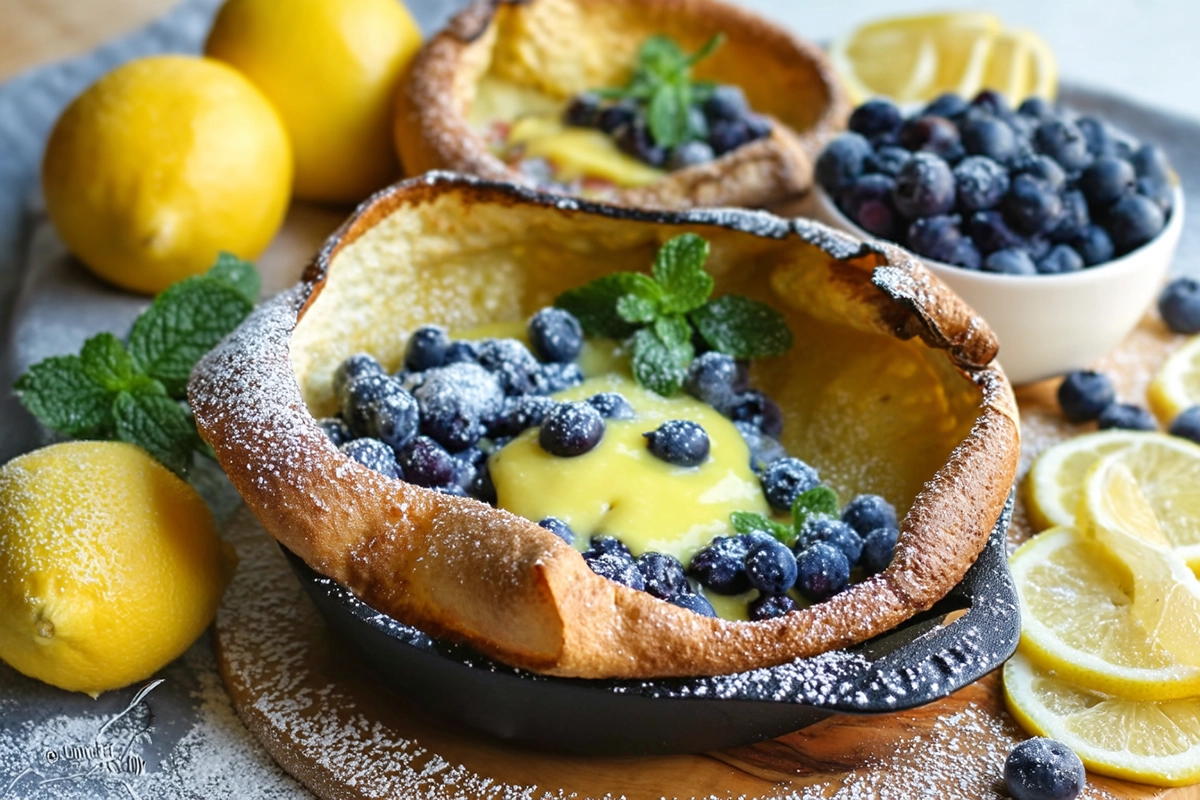
When you think about the perfect weekend breakfast or a show-stopping brunch, few dishes can rival the beauty and flavor of Dutch Babies with Lemon Curd and Blueberries. This dish isn’t just a treat for the taste buds; it’s a visual delight too, with its golden puffiness, zesty brightness, and vibrant berries. In this article, we’ll explore the charm, history, and secret behind making a flawless Dutch Baby. Let’s dive into the wonderful world of this puffy, citrusy goodness!
What Are Dutch Babies?
Dutch Babies, often referred to as German pancakes, are large, fluffy pancakes baked in the oven rather than on a griddle. Thanks to the steam generated during baking, they puff dramatically, creating a tender and airy center with beautifully crispy edges. Though they resemble Yorkshire pudding, they are sweeter and are typically enjoyed for breakfast or brunch.
You might be wondering: why the name Dutch Baby? Interestingly, the dish is not Dutch at all! It’s believed the term came from a mispronunciation of “Deutsch,” the German word for “German.” A Seattle restaurant called Manca’s Cafe popularized the name in the early 1900s, giving birth to the version we adore today.
The Allure of Lemon Curd and Blueberries
Adding lemon curd and blueberries to a Dutch Baby takes it from delightful to unforgettable. Lemon curd brings a sweet yet tangy burst of flavor that perfectly cuts through the richness of the pancake. Meanwhile, fresh blueberries add a juicy pop and a hint of natural sweetness that feels just right.
When paired together, these ingredients create an irresistible balance of tastes and textures: tangy, sweet, airy, and slightly crisp. It’s no wonder this combo has become a brunch favorite everywhere. Whether you’re hosting friends or treating yourself, Dutch Babies with Lemon Curd and Blueberries always leave a lasting impression.
Understanding Dutch Baby Pancakes
History and Origin
Dutch Baby pancakes have a rich story. They might seem American, but their roots go back to German immigrants. In the early 1900s, a small café in Seattle made them famous. The owner’s daughter nicknamed them “Dutch Babies,” twisting the German word “Deutsch” into “Dutch.”
Unlike regular pancakes, Dutch Babies bake in a hot oven. They puff up like magic because of the steam inside. No baking powder or yeast is needed—just simple ingredients mixed well. That’s why they taste so light and airy.
Their popularity grew because they’re easy to make yet feel so special. With a crispy edge and a custardy center, they bring a perfect mix of textures to your plate.
Texture and Taste Profile
When you slice into a Dutch Baby, you’ll first notice the crispy rim. It’s thin and golden, almost like a pastry. The inside is the real surprise—soft, tender, and slightly eggy, almost like a crepe but fluffier.
The taste is mild and a little buttery, making it perfect for sweet toppings like lemon curd and blueberries. Some even sprinkle powdered sugar on top to add a little extra sweetness.
Its beauty lies in the contrast: crisp edges, soft center, rich but not too heavy. Whether you top it with fruits, syrups, or spreads, a Dutch Baby always feels a little bit fancy but still homey.
Lemon Curd – The Zesty Companion
What Is Lemon Curd?
Lemon curd is a creamy spread made from simple ingredients. It usually includes lemon juice, sugar, eggs, and butter. When cooked together slowly, these ingredients turn into a thick, silky filling.
It has a bright, fresh taste that balances sweet and sour. The texture is smooth, almost like a soft pudding. Many people use it in tarts, cakes, or as a topping for scones. But trust me, it’s just as amazing on a warm, puffy Dutch Baby.
Homemade lemon curd tastes much better than store-bought. It has a fresher flavor and a brighter color. Plus, it’s easier to make than you might think!
Homemade vs. Store-Bought
When it comes to lemon curd, you have two choices: make it yourself or buy it from the store. Both options work, but there are big differences.
If you make it at home, you control the flavor and sweetness. Homemade curd is often tangier and more vibrant. It also has fewer preservatives, which keeps it tasting fresh and natural.
Store-bought lemon curd is quick and easy. Brands like Trader Joe’s and Bonne Maman offer good versions. But sometimes, they can taste overly sweet or a little dull compared to homemade.
If you have 10 to 15 minutes, I strongly recommend whipping up your own. It’s worth every second for that extra pop of lemony goodness.
Blueberries – The Perfect Pairing
Nutritional Benefits
Blueberries aren’t just tasty—they’re super healthy too. These little berries are packed with antioxidants. Antioxidants help protect your body from damage and keep you feeling young.
They’re also full of vitamins like vitamin C and vitamin K. Plus, blueberries are low in calories but high in fiber. This means they help you feel full longer without adding a lot of extra calories.
Eating blueberries often can help boost brain health, lower blood pressure, and even support heart health. It’s no wonder people call them a “superfood.”
Adding them to your Dutch Baby gives you a burst of flavor and a healthy kick at the same time.
Fresh vs. Frozen Blueberries
When making Dutch Babies, you can use either fresh or frozen blueberries. Both work well, but there are a few things to keep in mind.
Fresh blueberries are best when they’re in season. They’re juicy, firm, and have a natural sweetness. If you can find fresh ones, grab them!
Frozen blueberries are a great backup. They are picked at peak ripeness and frozen quickly, which locks in nutrients. If you’re using frozen berries, don’t thaw them first. Just toss them straight into your batter or on top after baking. This helps keep them from getting too mushy.
Both choices add great flavor, so pick what’s easy and available for you.
Recipe Overview
Ingredients List
Before you start, gather all your ingredients. It makes the process smooth and stress-free. Here’s what you’ll need:
-
3 large eggs
-
½ cup all-purpose flour
-
½ cup whole milk
-
1 tablespoon sugar
-
1 teaspoon vanilla extract
-
¼ teaspoon salt
-
2 tablespoons unsalted butter
-
½ cup lemon curd (homemade or store-bought)
-
1 cup fresh or frozen blueberries
-
Powdered sugar, for dusting
These simple items come together to create something truly special.
Equipment Needed
You don’t need fancy tools to make a perfect Dutch Baby. Just a few kitchen basics:
-
A 10- or 12-inch oven-safe skillet (cast iron works best)
-
Mixing bowl
-
Whisk
-
Measuring cups and spoons
-
Blender (optional, for a smoother batter)
If you have these, you’re ready to whip up a delicious, golden puff.
Step-by-Step Cooking Instructions
Preparing the Dutch Baby Batter
First, crack the eggs into a bowl. Whisk them until they look light and frothy. Next, add the flour, milk, sugar, vanilla, and salt. Whisk everything until smooth. If you want an extra smooth batter, you can use a blender.
Let the batter rest for about 10 minutes. This step helps the flour soak up the liquid, making your Dutch Baby puff better.
Making Homemade Lemon Curd
If you want fresh lemon curd, it’s easy. In a small pot, mix lemon juice, sugar, and eggs. Stir over low heat. When it starts to thicken, add butter. Keep stirring until it’s smooth and creamy.
Remove it from the heat and let it cool. Store it in a jar if you make it ahead.
Baking the Dutch Baby
Preheat your oven to 425°F (220°C). Put your skillet in the oven while it heats. A hot skillet is the secret to a great puff.
Once hot, add the butter. Swirl it around to coat the pan. Quickly pour the batter into the skillet. Bake for about 15 to 18 minutes. Watch as it puffs up and turns golden brown.
Don’t open the oven door too soon. You want to trap the steam inside for the best rise.
Assembling the Final Dish
When your Dutch Baby is ready, take it out of the oven. Spoon the lemon curd over the warm pancake. Scatter the blueberries on top. Dust with powdered sugar for a finishing touch.
Serve it right away while it’s still puffed and golden.
Variations and Substitutions
Fruit Alternatives
You don’t have to stick to just blueberries. Other fruits work just as well. Try sliced strawberries, raspberries, or even peaches. Mixed berries can also bring a fresh, colorful twist.
Make sure your fruit is fresh and juicy. If you use frozen fruit, don’t thaw it first. Toss it in frozen to avoid a soggy pancake.
Flavor Twists
Want to add even more flavor? Sprinkle a little cinnamon or nutmeg into your batter. A pinch is enough to warm up the taste.
You can also try a splash of almond extract instead of vanilla. It gives a sweet, nutty touch that pairs well with lemon curd.
For a real treat, zest a lemon into the batter. It makes the pancake smell and taste even brighter.
Dietary Modifications
It’s easy to adjust this recipe for different diets. If you need a gluten-free version, swap the all-purpose flour for a gluten-free blend. Choose one that says it’s good for baking.
For a dairy-free option, use almond milk or oat milk. Replace the butter with coconut oil or a dairy-free butter spread.
These simple swaps make sure everyone can enjoy a delicious Dutch Baby.
Serving and Presentation
Serving Suggestions
A Dutch Baby tastes best when it’s hot and fresh from the oven. Once you pull it out, don’t wait too long!
Top it with a good spoonful of lemon curd. Scatter blueberries all over. If you like, add a light dusting of powdered sugar.
For extra fun, serve it with a dollop of whipped cream or a drizzle of warm honey. These toppings make every bite even more special.
A simple side of crispy potatoes or a green salad also pairs nicely. It balances out the sweetness and turns it into a full meal.
Presentation Tips
First impressions matter. So, make your Dutch Baby look as good as it tastes.
Bake it in a cast-iron skillet and serve it right from the pan. It keeps the pancake warm and gives a cozy, rustic feel.
Pile the blueberries in the center and let a little lemon curd drip down the sides. A sprinkle of powdered sugar adds a beautiful, snowy touch.
Cut the pancake into wedges so everyone gets a bit of everything—the puffy edges, soft center, and lots of toppings.
Storage and Reheating
Storing Leftovers
If you have any leftover Dutch Baby, don’t worry. You can store it for later.
First, let it cool completely. Then, wrap it tightly in plastic wrap or put it in an airtight container. Store it in the fridge. It will stay fresh for about 2 days.
Keep the lemon curd and blueberries separate if you can. This way, the pancake won’t get soggy.
Reheating Tips
To enjoy your leftovers, reheat them the right way. Preheat your oven to 300°F (150°C). Place the Dutch Baby on a baking sheet. Warm it for about 8–10 minutes until heated through.
Avoid using the microwave if possible. It can make the pancake rubbery and flat. The oven helps it stay soft inside and slightly crisp at the edges.
Add fresh blueberries and a spoonful of lemon curd after reheating. This makes it taste just as good as when it was first made.
Frequently Asked Questions (FAQ)
Can I Make the Batter Ahead of Time?
Yes, you can! If you’re planning a busy morning, make the batter the night before. Cover it and keep it in the fridge.
When you’re ready to bake, give it a quick whisk. A rested batter often puffs up even better. Just make sure your skillet is very hot before pouring the batter in.
Why Didn’t My Dutch Baby Puff Up?
There are a few reasons it might not puff.
First, the pan must be very hot. If it’s not, the steam won’t form fast enough. Also, the batter should be smooth and not too cold.
Opening the oven door early is another mistake. Keep that oven shut until your Dutch Baby is golden and tall.
Is It Possible to Freeze Dutch Babies?
Yes, you can freeze a cooked Dutch Baby. Let it cool completely. Wrap it tightly in foil or plastic, then place it in a freezer-safe bag.
When you want to eat it, thaw it in the fridge overnight. Warm it in the oven at 300°F (150°C) until heated through. It won’t be as puffy, but it will still taste great.
Can I Use Other Fruits Instead of Blueberries?
Absolutely! Strawberries, raspberries, blackberries, or even sliced peaches work well.
Feel free to mix a few fruits for more color and flavor. Just use fresh or frozen fruits that aren’t too wet to keep the pancake crisp.
How Do I Prevent the Lemon Curd from Curdling?
The trick is to cook it gently. Always use low heat and stir constantly.
If the heat is too high, the eggs might scramble. A double boiler setup helps because it keeps the temperature steady and low.
Once it thickens and looks silky, take it off the heat right away.
Conclusion
Making Dutch Babies with Lemon Curd and Blueberries is easier than it looks. With just a few basic ingredients, you can create a dish that’s light, bright, and full of flavor.
The puffy pancake, rich lemon curd, and juicy blueberries come together in a way that feels fancy but takes very little effort. It’s the kind of breakfast that makes any morning feel special.
Whether you’re cooking for family, friends, or just yourself, this recipe is a real winner. It’s simple, beautiful, and always delicious.
Don’t be afraid to change things up, either. Try different fruits or add a little spice to make it your own.
Once you taste that first bite, with the tangy lemon and sweet berries melting into the soft pancake, you’ll see why this dish is a favorite around the world.
Enjoy every slice!
Print
Dutch Babies With Lemon Curd And Blueberries
- Total Time: 28 minutes
- Yield: 2-4 servings 1x
Description
Dutch Babies with Lemon Curd and Blueberries are the perfect breakfast or brunch dish. The puffy, golden pancake is topped with homemade lemon curd and fresh blueberries, creating a balance of tangy, sweet, and airy flavors. This delightful dish is as visually stunning as it is delicious, making it ideal for any special occasion or lazy weekend morning.
Ingredients
-
3 large eggs
-
½ cup all-purpose flour
-
½ cup whole milk
-
1 tablespoon sugar
-
1 teaspoon vanilla extract
-
¼ teaspoon salt
-
2 tablespoons unsalted butter
-
½ cup lemon curd (homemade or store-bought)
-
1 cup fresh or frozen blueberries
-
Powdered sugar, for dusting
Instructions
-
Preheat oven to 425°F (220°C).
-
Crack eggs into a bowl and whisk until frothy. Add flour, milk, sugar, vanilla, and salt. Whisk until smooth. Let the batter rest for 10 minutes.
-
If making homemade lemon curd, combine lemon juice, sugar, and eggs in a pot. Stir over low heat until thick, then add butter and stir until smooth. Cool.
-
Place an oven-safe skillet in the oven as it heats. Once hot, add butter to coat the pan. Pour in the batter and bake for 15-18 minutes until golden and puffed.
-
Spoon lemon curd over the warm pancake, scatter blueberries, and dust with powdered sugar. Serve immediately.
Notes
Use fresh or frozen blueberries. If using frozen, don’t thaw them.
You can make the batter ahead and store it in the fridge.
Homemade lemon curd adds a fresh, tangy flavor that enhances the dish.
Serve the Dutch Baby with whipped cream or honey for extra richness.
- Prep Time: 10 minutes
- Cook Time: 18 minutes
- Category: Breakfast, Brunch
- Method: Baking
- Cuisine: American