
brings everything comforting about autumn baking into one golden, cheese-topped loaf. This recipe combines a crisp olive oil crust, a soft and airy center, nutty Gruyère, fresh thyme, and flaky sea salt. Serve warm squares beside soup, roast chicken, holiday salads, or a seasonal appetizer board. Because the bread freezes well, you can bake it ahead for Thanksgiving, Friendsgiving, or any cool-weather gathering. Each bite delivers savory cheese, fragrant herbs, and the rich flavor that makes homemade focaccia worth the wait.
Story
I first started making this fall focaccia when I wanted a holiday bread that felt more special than dinner rolls but required less shaping. The combination of Gruyère and thyme immediately gave the loaf a cozy, savory character. Gruyère melts into golden pockets, while thyme adds an earthy aroma that suits cooler weather. Meanwhile, olive oil keeps the crumb tender and creates crisp edges around the pan. Unlike a basic homemade Italian focaccia, this version can stand alone as an appetizer or pair with soups and salads. The dough feels sticky, but that high hydration helps create the open, airy texture that makes focaccia so appealing. With patient mixing, two generous rises, and a hot oven, the loaf develops a deeply browned top and a light interior.
Ingredients
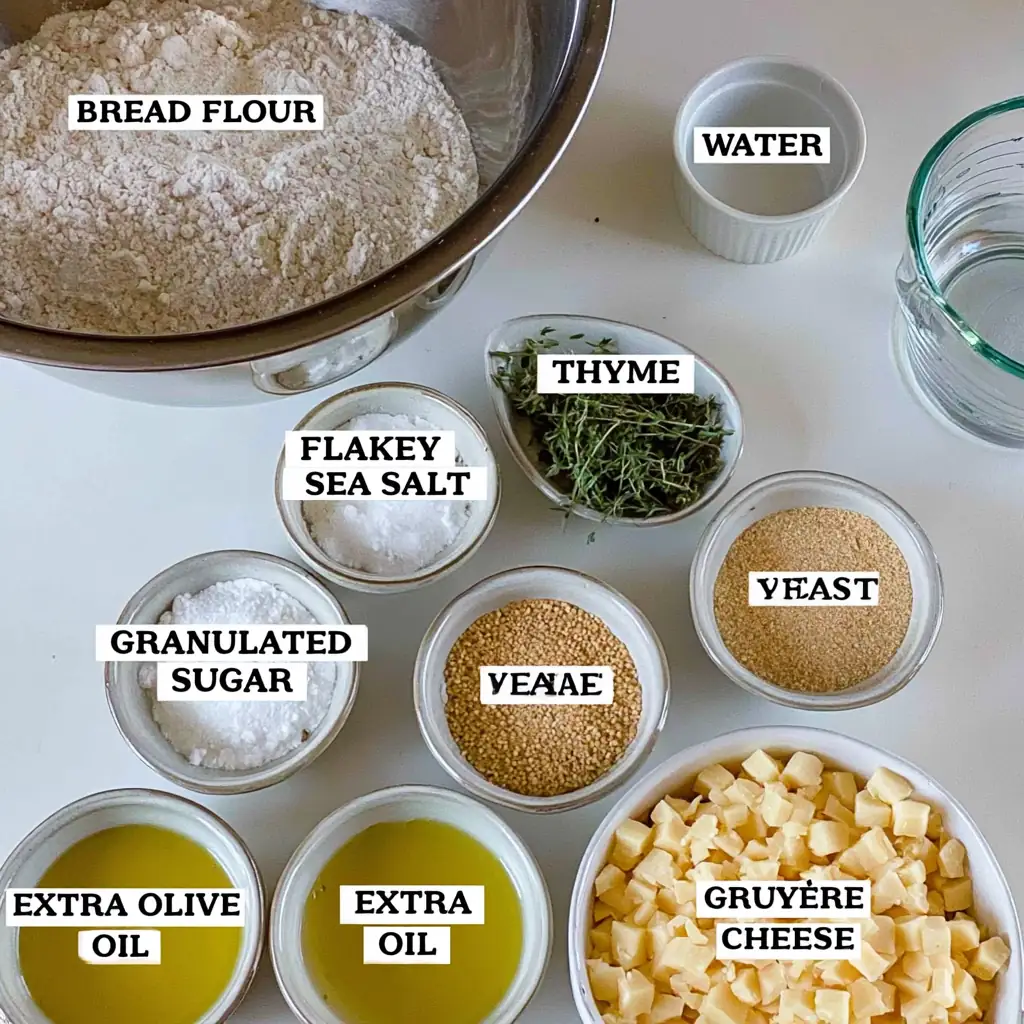
- 6 1/4 cups bread flour
- 2 teaspoons instant dry yeast
- 2 cups warm water, between 105°F and 115°F
- 1 tablespoon granulated sugar
- 1/2 cup plus 2 tablespoons extra virgin olive oil
- 4 teaspoons fine sea salt
- Extra virgin olive oil, for greasing the pan
- 1/4 cup extra virgin olive oil, for the topping
- 1/4 cup room-temperature water
- 7 ounces Gruyère cheese, cut into small cubes
- 2 tablespoons fresh thyme leaves
- 2 teaspoons Maldon sea salt flakes
Step-by-Step Instructions
This method builds dough strength gradually. Let the flour absorb each liquid addition, allow two full rises, and handle the dough gently before baking.
Preparing the Ingredients
Measure the bread flour accurately. Warm the water until it feels warm, not hot, because excessive heat can weaken the yeast. Cut the Gruyère into small cubes so it melts in scattered pockets instead of forming one heavy layer. Strip the thyme leaves from their stems, measure the salt, and coat a large mixing bowl with olive oil. Then, generously grease a light-colored 12-by-18-inch metal sheet pan. Whisk the topping water and olive oil before dimpling.
Cooking Instructions
Add the bread flour and instant yeast to a stand mixer fitted with a dough hook. Mix on medium-low speed, then slowly add the warm water in three batches. Wait until the flour absorbs each batch before adding more. Add the sugar and mix until evenly combined. Next, pour the 1/2 cup plus 2 tablespoons olive oil into the center in four additions. Let the dough absorb each addition, and occasionally turn the dough with a silicone spatula so the hook catches it. Add the fine sea salt after the final oil addition. Increase the mixer to high speed for one or two minutes, until the dough looks smooth, wraps around the hook, and makes a light popping sound. Shape it into a ball with oiled hands, place it in the prepared bowl, cover with plastic wrap, and let it rise in a warm, draft-free spot until tripled. Transfer the dough to the oiled sheet pan. Use gravity and gentle stretching to guide it toward the corners. When it springs back, rest it for ten minutes before continuing. Press deep dimples across the surface with oiled fingertips. Pour over the water-and-oil mixture, then scatter on Gruyère, thyme, and flaky salt. Cover and proof at 75°F to 80°F until tripled, about one hour. Heat the oven to 430°F with a rack in the upper-middle position. Remove the plastic carefully, bake for 25 to 30 minutes, and stop when the top looks deeply golden and crisp. Cool on a rack under a clean tea towel before slicing.
Tips for Perfect Results
Successful fall focaccia depends on texture, temperature, and rise. Keep the dough sticky, use a roomy bowl, and wait for an airy, delicate proof.
Common Mistakes to Avoid
Do not replace all the bread flour with all-purpose flour, because the lower protein content can produce a flatter, less chewy loaf. Oil your hands instead of adding extra flour. Avoid pouring all the water or olive oil into the mixer at once, since gradual additions help the dough absorb both properly. Never rush either rise; underproofed focaccia bakes dense and tight. Do not punch down the dough after the second proof. Remove the plastic slowly and move the pan gently. Finally, avoid cutting the bread while it remains piping hot. Early slicing releases steam and can make the center gummy.
Pro Tips for Better Flavor
Choose a flavorful extra virgin olive oil, because it seasons the dough, coats the pan, and finishes the top. For stronger herb flavor, lightly crush some thyme leaves between your fingers before scattering them. Keep the Gruyère cubes uneven, so some melt into the dimples while others brown on the surface. For a deeper gruyere thyme bread aroma, add a few extra thyme leaves during the last five minutes of baking. You can also grind a little black pepper over the finished loaf. Let the top reach a rich golden brown for toasted flavor and crisp texture.
Serving and Storage
This fresh herb bread tastes excellent at room temperature, yet reheating restores its crispest edges. Slice it into eighteen squares for a side dish or smaller rectangles for an appetizer tray. Store only after the loaf cools fully, since trapped steam softens the crust and encourages condensation.
How to Serve
Serve fall focaccia with butternut squash soup, tomato soup, roasted chicken, turkey, braised beef, or a crisp apple salad. For holiday meals, arrange warm squares in a towel-lined basket and place them near the main dishes. For appetizers, cut smaller pieces and pair them with olives, sliced pears, grapes, prosciutto, or mustard. The bread also makes a satisfying sandwich base when split horizontally. To reheat, place slices on a parchment-lined baking sheet and bake at 350°F for 18 to 20 minutes, until hot inside and crunchy outside.
How to Store Leftovers
Freeze leftover focaccia in an airtight freezer bag once it reaches room temperature. Place parchment between layers so the pieces separate easily. For the best texture, freeze the bread rather than refrigerating it, because refrigeration can dry the crumb and toughen the crust. Reheat frozen slices directly in a 350°F oven for 18 to 20 minutes. For the best quality, use it within two months. Avoid thawing it in a sealed bag at room temperature, since condensation can make the surface soggy.
Conclusion
This fall focaccia turns bread flour, olive oil, Gruyère, and thyme into a memorable seasonal side. Add liquids gradually and judge each rise by volume. Once baked, the loaf offers crisp edges, a soft center, melted cheese pockets, and fragrant herbs. Make it for a holiday meal, a weekend soup night, or any afternoon devoted to cozy autumn baking.
Discover more delicious recipes by following me on Facebook and Pinterest.
Frequently Asked Questions
Use the recipe’s visual cues alongside the stated times, since kitchen temperature changes dough behavior.
Can I Use Active Dry Yeast Instead of Instant Yeast?
Yes, use the same amount of active dry yeast. For dependable results, stir it into a small portion of the warm water with the sugar and let it stand for five to ten minutes, until foamy. Then add that mixture with the remaining water. The rise may take slightly longer, so watch the dough rather than the clock. Continue once it has tripled in size.
Why Is My Focaccia Dough So Sticky?
The dough should feel very sticky because it contains a high amount of water and olive oil. That moisture supports a light crumb and large air pockets. Do not correct the texture with extra flour. Instead, coat your hands, bowl, spatula, and pan with olive oil. After mixing and rising, the dough becomes easier to stretch, even though it never feels like firm sandwich-bread dough.
Can I Make Fall Focaccia Ahead of Time?
Yes. Bake the focaccia completely, cool it to room temperature, and cut it into serving pieces. Freeze the pieces in an airtight bag with parchment between layers. When you plan to serve them, place the frozen slices on a lined baking sheet and warm them at 350°F for 18 to 20 minutes. They will regain a crisp exterior while staying soft inside.

Fall Focaccia
- Total Time: 4 hours 20 minutes
- Yield: 18 pieces 1x
- Diet: Vegetarian
Description
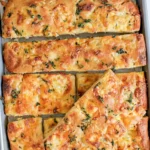
An airy Italian fall focaccia with crisp olive oil edges, melted Gruyère cheese, fragrant fresh thyme, and flaky sea salt. Serve it as a holiday appetizer or savory side dish.
Ingredients
- 6 1/4 cups bread flour
- 2 teaspoons instant dry yeast
- 2 cups warm water, 105°F to 115°F
- 1 tablespoon granulated sugar
- 1/2 cup plus 2 tablespoons extra virgin olive oil
- 4 teaspoons fine sea salt
- Extra virgin olive oil, for greasing the pan
- 1/4 cup extra virgin olive oil, for the topping
- 1/4 cup room-temperature water
- 7 ounces Gruyère cheese, cut into small cubes
- 2 tablespoons fresh thyme leaves
- 2 teaspoons Maldon sea salt flakes
Instructions
- Add the bread flour and instant yeast to a stand mixer fitted with a dough hook. Mix on medium-low speed.
- Slowly add the warm water in three batches, allowing the flour to absorb each batch before adding the next.
- Add the granulated sugar and mix until evenly combined.
- Pour 1/2 cup plus 2 tablespoons olive oil into the center of the dough in four additions. Let the dough absorb each addition before adding more. Turn the dough occasionally with a silicone spatula.
- Add the fine sea salt after the final olive oil addition and continue mixing until the oil becomes fully incorporated.
- Increase the mixer to high speed and mix for 1 to 2 minutes, until the dough looks smooth, wraps around the hook, and makes a light popping sound.
- Shape the sticky dough into a ball with oiled hands. Place it in a large oiled bowl, cover with plastic wrap, and let it rise in a warm, draft-free place until tripled in size.
- Generously grease the bottom and sides of a 12-by-18-inch metal sheet pan with olive oil.
- Transfer the dough to the prepared pan. Use gravity and gentle stretching to guide it toward the edges. Rest it for 10 minutes whenever it springs back, then continue stretching.
- Whisk 1/4 cup room-temperature water with 1/4 cup olive oil.
- Press deep dimples across the dough with oiled fingertips. Pour the water-and-oil mixture evenly over the surface.
- Scatter the Gruyère cubes, fresh thyme leaves, and Maldon sea salt flakes over the dough.
- Cover the pan with plastic wrap and proof in a warm place between 75°F and 80°F until the dough triples in size, about 60 minutes.
- Place an oven rack in the upper-middle position and heat the oven to 430°F.
- Remove the plastic wrap carefully without deflating the dough. Bake for 25 to 30 minutes, until the top looks deeply golden and crisp.
- Transfer the focaccia to a cooling rack, cover it with a clean tea towel, and cool to room temperature before removing it from the pan and slicing.
- To reheat, place focaccia slices on a parchment-lined baking sheet and bake at 350°F for 18 to 20 minutes, until hot inside and crunchy outside.
Notes
- Keep the dough very sticky. Do not add extra flour.
- Bread flour gives the focaccia a fluffier, chewier crumb and crisper crust than all-purpose flour.
- Active dry yeast may replace instant yeast in the same quantity. Bloom it in some of the warm water with the sugar before mixing.
- Rise times can vary depending on room temperature. Judge the dough by volume instead of time alone.
- Freeze cooled slices in an airtight freezer bag with parchment between the layers.
- Reheat frozen slices directly in a 350°F oven for 18 to 20 minutes.
- For the best quality, use frozen focaccia within two months.
- Prep Time: 3 hours 30 minutes
- Cook Time: 50 minutes
- Category: Appetizer, Side Dish
- Method: Baking
- Cuisine: Italian
Nutrition
- Serving Size: 1 piece
- Calories: 286
- Sugar: 1
- Sodium: 857
- Fat: 13
- Saturated Fat: 3
- Unsaturated Fat: 9
- Trans Fat: 0
- Carbohydrates: 33
- Fiber: 1
- Protein: 9
- Cholesterol: 12