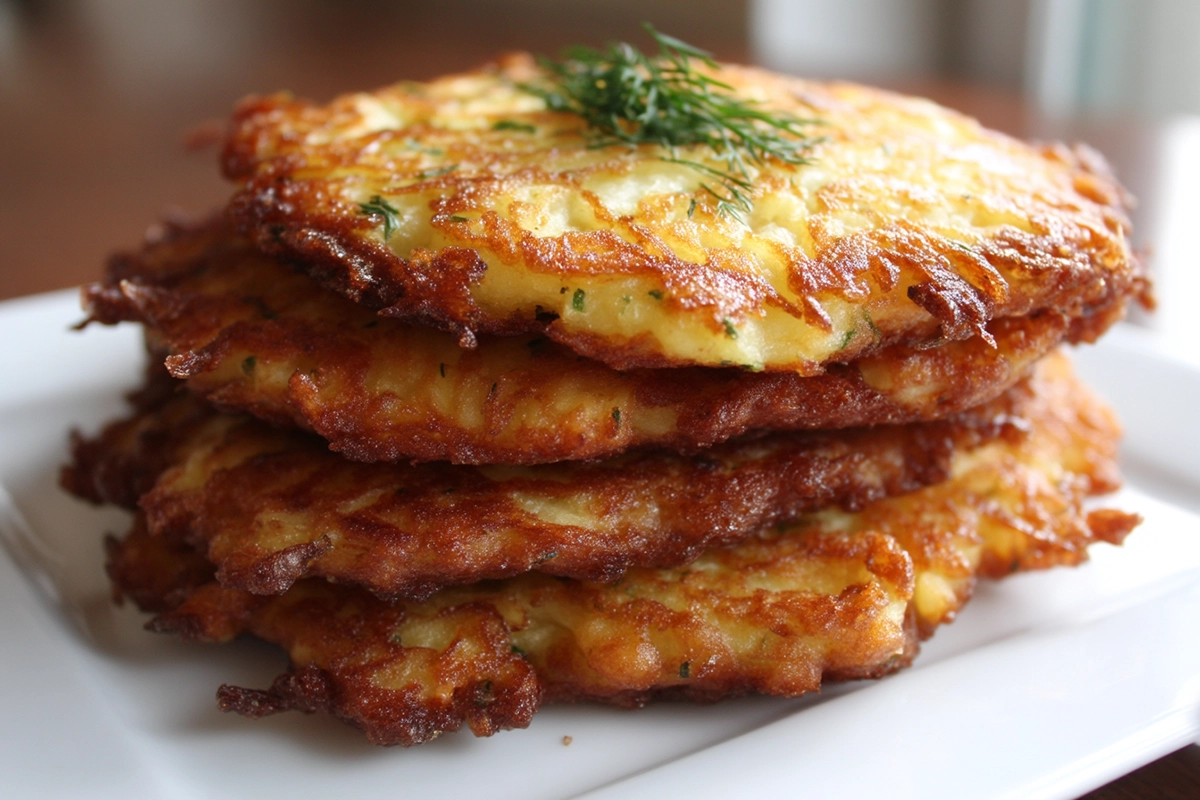
German cuisine is packed with hearty dishes and rustic charm, and German potato pancakes, or Kartoffelpuffer, are no exception. These golden, crispy delights are more than just a side dish. They’re a warm bite of tradition that spans generations, blending comfort with simple, earthy ingredients. Whether enjoyed at a festive Christmas market or made fresh at home, they never fail to deliver that crave-worthy crunch.
Let’s explore their origins, cultural importance, and why this humble dish has remained a staple across German households for centuries.
Introduction
Overview of German Potato Pancakes
German potato pancakes are shallow-fried fritters made from grated potatoes, onions, eggs, and flour. Known as Kartoffelpuffer in most regions, they’re crispy on the outside and tender inside. They’re commonly eaten with applesauce for a sweet contrast, or with sour cream for a savory twist.
Despite their simplicity, these pancakes are loaded with flavor. Their appeal lies not just in taste but in their versatility—served at breakfast, lunch, or dinner.
Cultural Significance in Germany
You’ll often find Kartoffelpuffer served during autumn festivals and Christmas markets. They’re a staple at food stalls, offering nostalgic comfort in every bite. They’ve been a beloved part of German culinary tradition since the 19th century.
What makes these pancakes truly special is how they vary across the country. Different regions call them by names like Reibekuchen, Grumbeerpannekuchen, or Kromperschnietscha, each adding its own spin to the mix. Some versions lean sweet, while others go fully savory.
No matter the name, one thing stays the same: their ability to bring families together, often passed down in handwritten recipe cards, filled with flour smudges and fond memories.
Next, we’ll uncover how these irresistible pancakes came to be—and how they’ve evolved into one of Germany’s most iconic comfort foods.
Historical Background
The Origins of Kartoffelpuffer
German potato pancakes go way back. They first became popular in the late 1800s. At the time, they were sold by street vendors, especially in big cities like Berlin. Cheap and filling, they were a go-to food for working-class families.
Back then, potatoes were a staple. They were easy to grow and store. So people used what they had. With a few basic ingredients—like grated potatoes, onion, and fat for frying—they made this tasty, crispy treat.
Over time, these pancakes became more than just street food. They moved into family kitchens and onto holiday tables. They started showing up at fairs and markets, especially during fall and winter.
Regional Names and Variations
Across Germany, Kartoffelpuffer go by many names. In the West, they’re often called Reibekuchen. In Bavaria, you might hear Erdäpfelpuffer. In the east, some say Kartoffelplätzchen. The name changes, but the heart of the dish stays the same—grated potatoes, crisp edges, and a warm center.
Each region tweaks the recipe just a bit. Some add grated apples for a touch of sweetness. Others might skip onions or use different fats for frying. In Saxony, a dish called Quarkkäulchen includes cheese and is served sweet. Meanwhile, in Westphalia, Pickert is made with yeast and raisins. Even latkes, common in Jewish cooking, are quite similar but often use matzo meal.
No matter the version, people across Germany love these golden pancakes. They’re part of everyday meals, festive dinners, and cozy family weekends.
Next, we’ll break down what goes into making the perfect German potato pancake and how to get it crispy every time.
Ingredients and Preparation
Essential Ingredients for Authentic German Potato Pancakes
To make German potato pancakes, you don’t need fancy ingredients. Just a few pantry basics do the trick.
Main Ingredients
-
Potatoes – Choose starchy ones like Russet or Yukon Gold. They hold together better and make crispier pancakes.
-
Onion – Adds a nice flavor and a bit of moisture.
-
Eggs – Help bind everything together.
-
Flour – Gives structure. Use all-purpose flour for best results.
-
Salt and pepper – Simple seasoning brings out the flavor.
That’s it. No extras needed to keep it traditional.
Optional Additions
Some people like to add a twist. Here are a few ideas:
-
Chopped chives or parsley for color and taste.
-
A pinch of nutmeg for warmth.
-
Grated apple or a little sugar if you want them sweet.
You can adjust to suit your taste, but it’s good to start simple.
Step-by-Step Preparation Guide
Making the batter is easy, but the method matters. Follow these steps for the best texture and crunch.
Grate and Drain the Potatoes
Peel the potatoes first. Grate them using a box grater or food processor. Then place them in a clean towel and squeeze out as much water as possible. This step is key—wet potatoes make soggy pancakes.
Grate the onion too and mix it with the potatoes.
Mix and Season
In a large bowl, combine the grated mix with eggs, flour, salt, and pepper. Stir until everything is coated evenly. The batter should be thick but not dry.
Fry Until Golden
Heat oil in a skillet—just enough to coat the pan. Drop spoonfuls of batter into the hot oil. Flatten each one with a spatula. Fry for 3–4 minutes on each side, or until both sides are golden and crisp.
Place cooked pancakes on a paper towel to drain extra oil.
Bake Instead (Optional)
If you want a lighter version, you can bake them. Spoon the batter onto a lined baking sheet. Flatten gently. Bake at 400°F (200°C) for about 20–25 minutes, flipping halfway.
They won’t be as crispy, but they’ll still taste great.
Up next, we’ll look at tasty toppings and how people enjoy Kartoffelpuffer across Germany.
Serving Suggestions
Traditional and Modern Accompaniments
German potato pancakes are tasty on their own. But the right toppings can make them even better. Some like them sweet, while others go for savory. Let’s look at both.
Sweet Toppings
The most popular sweet topping is applesauce. It adds a soft, fruity taste that balances the crispy pancakes.
You can also try:
-
Sugar and cinnamon – Sprinkle on top for a cozy treat.
-
Fruit jam or preserves – A spoonful of plum or cherry jam gives a bold flavor.
-
Fresh fruit slices – Apples, pears, or berries work well.
These choices are perfect for breakfast or a snack.
Savory Pairings
If you prefer salty over sweet, go for these:
-
Sour cream – Cool and creamy, it matches the warm crunch.
-
Herb dips – Try yogurt with dill, chives, or parsley.
-
Smoked fish – In some regions, people top their pancakes with smoked salmon or trout. It’s light and flavorful.
Savory toppings make Kartoffelpuffer great for lunch or dinner.
Meal Ideas
You can also serve them as a side dish. They pair well with:
-
Roasted vegetables
-
Eggs – For a simple breakfast plate
-
Green salad – For a lighter meal
These pancakes are flexible. You can enjoy them hot, warm, or even cold the next day.
Coming up, we’ll explore how other places make their versions of potato pancakes. Some are sweet, some savory—but all are delicious.
Regional and International Variations
Exploring Variants of Potato Pancakes
While German potato pancakes are special, other places have their versions. These recipes are a bit different, but all share the same comfort and crispiness.
Quarkkäulchen – Saxony’s Sweet Take
This treat comes from Saxony, a region in eastern Germany. It mixes mashed potatoes with quark, a creamy cheese. People add sugar, cinnamon, and sometimes raisins. Then they fry the mix in butter. These pancakes are often served with fruit or jam. They’re soft inside and lightly sweet.
Pickert – A Hearty Dish from Westphalia
In Westphalia, people make a thicker pancake called Pickert. It uses grated potatoes, flour, eggs, and yeast. Some versions include raisins. Unlike Kartoffelpuffer, Pickert is cooked on a griddle or even baked. It’s usually served with butter and jam. Sometimes, it’s enjoyed with cheese or other spreads.
Latkes – A Classic in Jewish Cuisine
Latkes look a lot like Kartoffelpuffer, but they have a few differences. They’re often made with matzo meal and baking powder. The texture is crunchier, and the flavor can be a little stronger. Latkes are most popular during Hanukkah and are cooked in oil to honor tradition.
Rösti – A Swiss Favorite
In Switzerland, people make Rösti. It uses parboiled potatoes instead of raw ones. That gives a softer bite. The potatoes are shredded and fried in a pan until golden. Unlike Kartoffelpuffer, Rösti is usually shaped into one big round. It’s often served with eggs or vegetables.
Each version reflects local taste and tradition. But they all show how simple food, like potatoes, can bring people together. Now, let’s learn how to make your pancakes just right, every time.
Tips and Tricks for Perfect Kartoffelpuffer
Expert Advice for Optimal Results
Want to make German potato pancakes that are crispy and tasty every time? Follow these simple tips to get it right.
Use the Right Potatoes
Starchy potatoes work best. Russet or Yukon Gold are great choices. They hold together better and make crispier edges. Waxy potatoes, like red or new potatoes, can turn soggy.
Remove the Extra Water
This step is key. After grating the potatoes, wrap them in a clean towel. Squeeze out as much water as you can. Less moisture means more crunch.
You can also let the grated potatoes sit for a few minutes. The water will settle at the bottom. Pour it off, but keep the white starch that collects—that helps hold everything together.
Heat the Oil Just Right
Don’t fry in cold oil. It makes greasy pancakes. Heat the oil until it sizzles when you drop in a bit of batter. Too hot? The pancakes burn. Too cool? They soak up oil. Medium-high heat works best.
Use a pan with a heavy bottom. It helps keep the heat even.
Don’t Crowd the Pan
Fry just a few pancakes at a time. If you crowd the pan, the oil cools down. That makes the pancakes soggy. Give each one space so it cooks crisp and golden.
Keep Them Warm and Crispy
After frying, place the pancakes on paper towels. It soaks up extra oil. To keep them warm, put them on a baking sheet in a low oven—around 200°F (95°C). This keeps the outside crispy until you’re ready to serve.
Reheating Tips
Got leftovers? No problem. Reheat them in a dry pan or oven. Avoid the microwave—it makes them soft. A hot pan brings back that crispy texture in just a few minutes.
Next, we’ll check out the health side of Kartoffelpuffer—what’s in them, and how to make lighter versions if you need.
Nutritional Information
Health Aspects of German Potato Pancakes
German potato pancakes are tasty, but what about their nutrition? Let’s look at what they offer and how you can make them a bit healthier.
Caloric Content
A typical pancake has about 150 to 200 calories. It depends on size and how much oil is used. Most of the calories come from potatoes and oil. If you eat them with sweet toppings like applesauce or jam, that adds more sugar.
Nutritional Breakdown
Here’s a quick look at what’s inside:
-
Carbs – Potatoes are rich in carbs, which give energy.
-
Fats – Most come from frying oil.
-
Protein – Eggs add a bit of protein.
-
Fiber – Potatoes have some fiber, especially with the skin.
-
Vitamins – You get small amounts of Vitamin C and potassium.
It’s a simple dish with basic nutrients. But because they’re fried, they’re not low-fat.
Dietary Considerations
Want a lighter version? Try baking instead of frying. Use less oil or choose air-frying for a crisp texture with fewer calories.
You can also:
-
Swap flour for gluten-free mix – Great for those with allergies.
-
Skip the eggs – Use flaxseed meal and water instead, if you’re vegan.
-
Add more veggies – Mix in carrots or zucchini for extra nutrients.
These small changes make Kartoffelpuffer work for more diets, without losing flavor.
We’re almost done. But first, let’s explore some common questions people ask about this dish and answer them.
Frequently Asked Questions (FAQ)
Common Queries About German Potato Pancakes
People often have questions about German potato pancakes. Here are clear answers to help you out.
What is the difference between Kartoffelpuffer and latkes?
Both dishes are made from grated potatoes and are fried. The main difference is in the ingredients and origin.
-
Kartoffelpuffer are from Germany.
-
Latkes are common in Jewish cooking.
Latkes often include matzo meal or baking powder. Kartoffelpuffer usually sticks to eggs, flour, and seasoning. The taste and texture are similar, but each has its twist.
Can I make them ahead of time?
Yes, you can. Fry them as usual. Let them cool. Store them in the fridge for up to 3 days. Reheat in a hot, dry pan or oven. This keeps them crisp. Avoid using the microwave—it makes them soft.
Are there gluten-free versions?
Yes. You can use gluten-free flour instead of regular flour. Some people even use oat flour or potato starch. Just make sure the mix still binds well. You want pancakes that hold together when fried.
What are the best potatoes to use?
Starchy ones work best. Russet and Yukon Gold are great choices. They give a crispy edge and soft inside. Avoid waxy potatoes. They hold too much water and turn out mushy.
How do I make them crispier?
Start with dry potatoes. Squeeze out all extra water. Heat the oil well before frying. Don’t crowd the pan. Flip the pancakes just once. Let them fry until golden and crunchy on both sides.
These tips should help you enjoy Kartoffelpuffer with confidence. Now, let’s wrap it all up with some final thoughts.
Conclusion
Embracing the Tradition of German Potato Pancakes
German potato pancakes are more than just a dish. They carry memories, culture, and comfort. Simple ingredients come together to create something warm, crispy, and full of flavor.
They’ve been loved for over a hundred years. Families pass down their versions. Street vendors still sell them at markets. At home, they bring joy to breakfast or dinner tables.
You don’t need to be a chef to make them. With grated potatoes, a little flour, and a hot pan, anyone can enjoy this classic. Whether you like them sweet with applesauce or savory with sour cream, there’s a way for everyone to enjoy.
Try them. Make them your own. Share them with friends or family. Kartoffelpuffer may be simple, but they leave a lasting taste on your plate and in your heart.
Print
German Potato Pancakes (Kartoffelpuffer): A Culinary Delight
- Total Time: 40 minutes
- Yield: 12 small pancakes (serves 4) 1x
- Diet: Vegetarian
Description
German Potato Pancakes, or Kartoffelpuffer, are traditional shallow-fried fritters made from grated potatoes, onions, eggs, and flour. Crispy on the outside and soft inside, these golden bites are beloved in German households, often served with applesauce or sour cream. Simple yet deeply flavorful, they reflect a rich cultural heritage and are especially popular at autumn festivals and Christmas markets.
Ingredients
-
pounds starchy potatoes (e.g., Russet or Yukon Gold), peeled and grated
-
1 medium onion, grated
-
2 large eggs
-
¼ cup all-purpose flour
-
1 teaspoon salt
-
¼ teaspoon black pepper
-
Vegetable oil, for frying
Optional Additions:
-
Chopped parsley or chives
-
Pinch of nutmeg
-
1 grated apple (for a sweet variation)
Instructions
-
Grate and Drain Potatoes: Grate the potatoes and place them in a clean kitchen towel. Squeeze out as much moisture as possible. Do the same with the onion.
-
Mix Ingredients: In a large bowl, combine grated potatoes, onion, eggs, flour, salt, and pepper. Mix until well combined.
-
Heat Oil: In a heavy-bottomed skillet, heat a thin layer of vegetable oil over medium-high heat.
-
Form and Fry: Spoon portions of the mixture into the hot oil. Flatten each with a spatula. Fry 3–4 minutes per side, until golden and crispy.
-
Drain and Serve: Remove pancakes and drain on paper towels. Serve hot with applesauce or sour cream.
Notes
For extra crispiness, ensure the grated potatoes are very dry.
To keep pancakes warm and crispy, place them in a 200°F (95°C) oven until serving.
For a lighter version, bake at 400°F (200°C) for 20–25 minutes, flipping halfway.
Can be stored in the fridge and reheated in a pan or oven (avoid the microwave).
- Prep Time: 20 minutes
- Cook Time: 20 minutes
- Category: Side Dish
- Method: Frying
- Cuisine: German