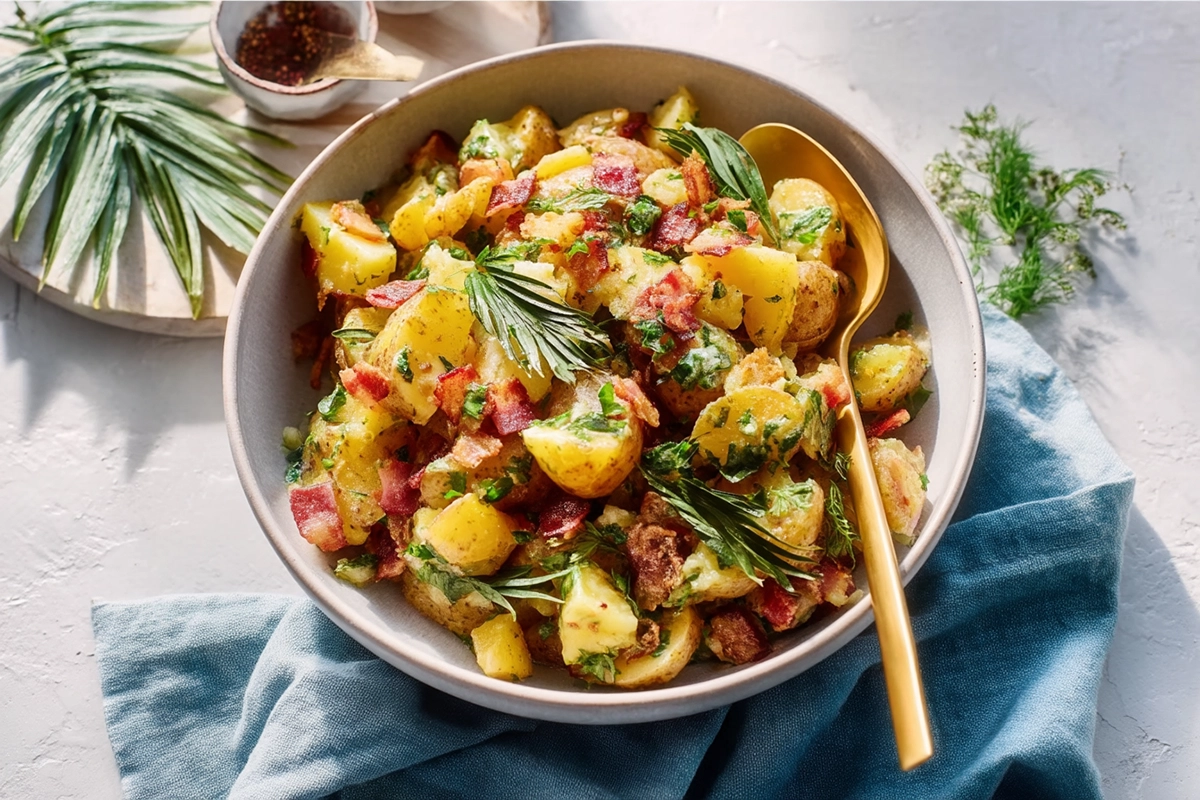
Potato salad is one of those dishes that instantly sparks comfort and nostalgia. But if you’ve only tasted the creamy, mayo-heavy version, you’re missing out on a whole new world of flavor. German Potato Salad, with its warm, tangy character, offers a vibrant contrast that’s just as comforting—maybe even more so. It’s a dish that has stood the test of time, delighting taste buds across generations and borders.
This article digs into this beloved side’s roots, variations, and secrets. Get ready to learn what makes German Potato Salad stand out, from its historical roots to its regional twists and easy prep.
What is German Potato Salad?
A hearty, tangy, and warm potato side dish
At its core, German Potato Salad is a vinegar-based dish often served warm and tossed with cooked potatoes, sautéed onions, and herbs. Unlike the more common American version loaded with mayonnaise, this one’s all about a savory bite. It’s light but full of flavor, with a slightly acidic tang that balances the richness of the potatoes.
Across Germany, the ingredients and presentation might change a bit, but one thing remains constant: it’s meant to be hearty, wholesome, and packed with character.
Why German Potato Salad is Unique
A flavorful difference with deep cultural roots
What really sets German Potato Salad apart is not just the absence of mayo, but its deep connection to German tradition. This dish mirrors the country’s culinary philosophy: use simple, high-quality ingredients and bring them together in a way that highlights flavor without fuss.
Another major difference is temperature—this salad is often served warm or at room temperature, which enhances the flavors and makes it a perfect companion to many hearty meals. Whether it’s a backyard barbecue or a festive family dinner, this side dish easily earns a spot at the table.
You’ll also find that different parts of Germany put their spin on it. Some regions use broth, others mustard, and some even fold in sweet or tangy add-ins. No matter the variation, one thing’s clear—German Potato Salad is a crowd-pleaser, bursting with bold, layered flavors.
Stay tuned as we dive deeper into where it all started and how it’s evolved into one of the most beloved dishes around.
Historical Background
Origins of Potato Salad in Europe
Potatoes take root in European kitchens
Potatoes came to Europe in the 16th century. Brought from South America, they were first met with suspicion. But as people saw how easy they were to grow and how filling they were, potatoes became a staple food across the continent.
Germany, with its cold climate and farming traditions, welcomed the potato. It quickly turned into a favorite in home kitchens. Soon, cooks began mixing boiled potatoes with oils, vinegar, herbs, and spices. This simple mixture was the start of what we now call German Potato Salad.
Over time, people in different regions added their touches. Some added onion or mustard. Others used meat stock to boost flavor. The salad was easy to make, affordable, and filling—perfect for busy families and large gatherings.
Evolution of German Potato Salad
From old-world comfort to worldwide fame
As Germans moved to other countries, they brought their food traditions with them. In places like the U.S., German Potato Salad found new fans. It showed up at potlucks, picnics, and family dinners.
Over the years, it began to change. Some cooks added mayo. Others swapped in sweet pickles or eggs. Still, the classic version—warm potatoes with a tangy dressing—stayed strong in German homes and restaurants.
Today, you’ll find dozens of versions of German Potato Salad. Some are served warm, others cold. Some have herbs like dill or parsley. Some use mustard for extra zing. Each one tells a story of the place and people behind it.
What started as a humble side dish is now a favorite across the globe. And it all began with a simple idea: let the potatoes shine.
In the next section, we’ll explore how each region in Germany adds its spin to this beloved dish.
Regional Variations
Southern Germany (Bavarian Style)
Warm, tangy, and bold
In southern Germany, German Potato Salad is usually served warm. It’s simple but packed with flavor. The potatoes are thinly sliced and mixed with a tangy dressing made from vinegar, mustard, and onions. Sometimes, a bit of broth is added to help the potatoes soak in more flavor.
This version is smooth, savory, and full of depth. People love it next to grilled meats or schnitzel. It’s often topped with fresh herbs for extra color and taste.
Northern Germany
Cool and creamy with a twist
Northern regions do it differently. Here, the salad is often cold and made with a creamy dressing. While not the classic version, it’s still considered a part of the German Potato Salad family.
It often includes mayonnaise, pickles, and sometimes even apples. It’s sweeter and milder than the southern kind. You’ll find it more often at summer gatherings or holiday dinners.
Swabian Potato Salad
Simple, soft, and savory
Swabia, a region in southwestern Germany, brings its own charm. This version skips the cream and focuses on a light, clear broth. Potatoes are sliced very thin and soaked in warm beef or vegetable broth with a bit of mustard, oil, and vinegar.
It may sound plain, but it’s full of delicate flavor. The broth gives the salad a soft, smooth feel. Swabians take pride in how each potato slice is perfectly coated and never mushy.
Each of these styles shows just how flexible German Potato Salad can be. From warm and bold to cool and creamy, there’s a version for every plate.
Ingredients and Preparation
Essential Ingredients
Simple things that make a big flavor
To make German Potato Salad, you don’t need much. The ingredients are easy to find, and most are already in your kitchen.
-
Waxy potatoes like red or Yukon Gold (they hold their shape better)
-
Onions, chopped (yellow or red, both work)
-
Vinegar (apple cider or white is best)
-
Mustard (a little adds great flavor)
-
Oil (neutral oils like canola or sunflower)
-
Salt and pepper to taste
-
Fresh herbs like parsley or chives for color and flavor
These basics are the heart of the dish. They create that bold, tangy taste everyone loves.
Optional Add-ins
Boost the flavor or add a twist
Want to make it your own? Here are some things you can add:
-
Chopped pickles for a little crunch
-
Celery for freshness
-
Hard-boiled eggs, chopped, for extra protein
-
Green onions instead of regular onions
-
Caraway seeds for a traditional German twist
Keep it simple or get creative. The salad works either way.
Step-by-Step Preparation Guide
Easy steps to make it right
1. Boil the potatoes
Wash and boil them with the skin on. This keeps them firm. Don’t overcook—just until they’re fork-tender.
2. Let them cool a bit
Peel them while still warm. Then slice into even pieces.
3. Make the dressing
In a pan, heat a bit of oil. Add chopped onions and cook until soft. Then mix in vinegar, mustard, salt, and pepper. Stir well.
4. Mix it all
Pour the warm dressing over the warm potatoes. Gently toss so the potatoes soak up the flavor.
5. Add herbs and extras
Sprinkle chopped herbs or any extras you like. Mix one more time.
6. Serve warm or at room temperature
That’s the classic way. But it also tastes great cold the next day.
This salad is quick, full of flavor, and easy to make. Perfect for busy weeknights or big family dinners.
Nutritional Information
Caloric Content
Know what’s on your plate
German Potato Salad is lighter than many creamy salads. A one-cup serving has about 180 to 200 calories. Most of the calories come from the potatoes and oil used in the dressing.
Because it doesn’t use mayo or heavy cream, it’s a better choice if you’re watching your fat intake. You can also use less oil or a lighter vinegar to lower the calorie count even more.
Macronutrient Breakdown
A balanced bite
Here’s a simple look at what you’re eating in each serving:
-
Carbohydrates: Potatoes give the salad energy and fiber.
-
Fats: The oil in the dressing adds healthy fats.
-
Protein: It’s low, but can increase if you add extras like eggs or beans.
This dish is filling, thanks to the potatoes, and gives steady energy without heavy sauces.
Health Considerations
Tasty and better for you
This salad fits many diets. It’s naturally gluten-free if you skip broth with added wheat. It’s also a smart pick for those avoiding mayo-based dishes.
Want to make it even healthier? Use olive oil instead of processed oils. Add fresh herbs for more nutrients and flavor. You can also serve it with grilled veggies or lean meats to balance your plate.
It’s proof that simple food can still be smart food.
Serving Suggestions
Ideal Pairings
What to serve with German Potato Salad
This salad goes well with many meals. It has a sharp, tangy taste that balances rich or savory dishes. Here are some great matches:
-
Grilled chicken – light and smoky flavors pair nicely.
-
Roasted turkey or beef – the salad cuts through the richness.
-
Pan-fried fish adds freshness and texture.
-
Vegetable skewers – perfect for a meatless meal.
You can also serve it with eggs or veggie patties for a light lunch. It works just as well as a main or a side.
Occasions for Serving
When to make it
German Potato Salad fits almost any event. It’s quick to make and easy to carry. That makes it a favorite for:
-
Picnics and potlucks
-
Holiday dinners like Easter or Thanksgiving
-
Weeknight meals when you want something simple but tasty
-
Outdoor cookouts – especially with grilled food
-
Family gatherings or buffet-style meals
It holds up well at room temperature, so you don’t have to worry about keeping it cold. That’s one more reason why people love it for big events.
With just a few basic steps, this dish becomes the star of your table. It’s flexible, fast, and full of flavor.
Tips and Tricks
Enhancing Flavor
Make it even better with these smart tips
The key to great German Potato Salad is how the potatoes soak up flavor. Here’s how to get it just right:
-
Use warm potatoes – they absorb the dressing better than cold ones.
-
Add the dressing while the potatoes are still warm – this helps every slice soak up that tangy taste.
-
Try pickle juice – just a splash adds a bright, zesty kick.
-
Use a good vinegar – apple cider vinegar gives a deeper flavor than plain white vinegar.
-
Taste as you go – small changes make a big difference.
You don’t need fancy tools or hard-to-find items. Simple tricks bring out the best in this dish.
Storage and Reheating
Keep it fresh and tasty
Got leftovers? No problem. This salad stores well and even tastes better the next day.
-
Let it cool before storing – warm food can create moisture that turns soggy.
-
Use an airtight container – keeps it fresh for up to 4 days in the fridge.
-
Warm it up gently – heat it slowly on the stove or in the microwave. Stir often so it heats evenly.
-
Add a splash of broth or water when reheating – this keeps it moist and helps bring back flavor.
It’s a dish that’s easy to store, simple to reheat, and always satisfying. Whether it’s the same day or the next, German Potato Salad stays delicious.
Frequently Asked Questions (FAQ)
Can German Potato Salad be made ahead of time?
Yes, it’s a great make-ahead dish
You can make German Potato Salad a day early. It holds up well in the fridge. In fact, some say it tastes even better the next day. The potatoes soak up more flavor as they sit.
Before serving, let it warm to room temperature or heat it gently on the stove.
Is it served warm or cold?
Traditionally warm, but it’s flexible
Classic German Potato Salad is served warm. That’s how the flavors shine best. But it also tastes good at room temperature or chilled. It’s all about your preference.
What are the best potatoes to use?
Waxy types work best
Use waxy potatoes like Yukon Gold, red potatoes, or new potatoes. They hold their shape and don’t fall apart. Avoid starchy potatoes like russets—they can turn mushy.
How long can it be stored?
Up to four days
Keep leftovers in an airtight container in the fridge. It stays fresh for 3–4 days. Always let it cool before sealing to avoid moisture build-up.
Can it be made vegetarian?
Absolutely
Just skip any meat-based add-ins. Use vegetable broth instead of meat broth in the dressing. The flavor will still be rich and satisfying.
This salad is simple, but these tips can help make it perfect for any table.
Conclusion
Recap of Key Points
Why German Potato Salad stands out
German Potato Salad is more than just a side dish. It’s full of flavor, made from simple ingredients, and loved by many. Unlike mayo-based salads, it’s lighter and tangier. It’s also easy to make and works for any season or meal.
We explored where it came from, how it changed over time, and the many ways it’s made across Germany. Whether warm or cold, it’s always tasty and comforting.
Print
German Potato Salad: A Tangy Twist on a Classic Side Dish
- Total Time: 35 minutes
- Yield: 4 to 6 servings 1x
- Diet: Vegetarian
Description
German Potato Salad is a warm, tangy side dish made with sliced potatoes, onions, vinegar, mustard, and herbs. Unlike mayo-based potato salads, this version is lighter and more flavorful, often served warm or at room temperature. A favorite at cookouts and family dinners, it pairs perfectly with grilled meats and festive gatherings.
Ingredients
Core Ingredients:
-
2 lbs waxy potatoes (Yukon Gold or red potatoes)
-
½ cup finely chopped yellow or red onion
-
¼ cup apple cider vinegar
-
1 tablespoon German or Dijon mustard
-
2 tablespoons neutral oil (like canola or sunflower)
-
Salt and black pepper to taste
-
2 tablespoons chopped fresh parsley or chives
Optional Add-ins:
-
2–3 chopped pickles
-
2 chopped hard-boiled eggs
-
1 stalk celery, diced
-
1–2 teaspoons caraway seeds
-
1–2 green onions, sliced
-
2–3 tablespoons pickle juice (in place of or along with vinegar)
Instructions
-
Boil the potatoes
Place whole, unpeeled potatoes in a large pot. Cover with water and bring to a boil. Cook until fork-tender (about 15–20 minutes). Drain and let cool slightly. -
Peel and slice
While still warm, peel the potatoes (optional) and cut into thin slices. Place in a large bowl. -
Cook the onions and dressing
In a small skillet, heat oil over medium heat. Add onions and cook until soft. Stir in vinegar, mustard, salt, and pepper. Let it heat through. -
Combine
Pour the warm dressing over the sliced potatoes. Toss gently to coat. The warm potatoes will soak up the flavor. -
Add extras and herbs
Stir in optional ingredients and finish with chopped parsley or chives. -
Serve
Serve warm or at room temperature. Refrigerate leftovers and reheat gently if desired.
Notes
Use waxy potatoes to help the salad hold its shape.
Always add dressing while potatoes are warm.
Flavor improves after resting for 1–2 hours.
Add a splash of broth or pickle juice when reheating to refresh the flavor.
- Prep Time: 15 minutes
- Cook Time: 20 minutes
- Category: Side Dish
- Method: Boiled, Sautéed
- Cuisine: German