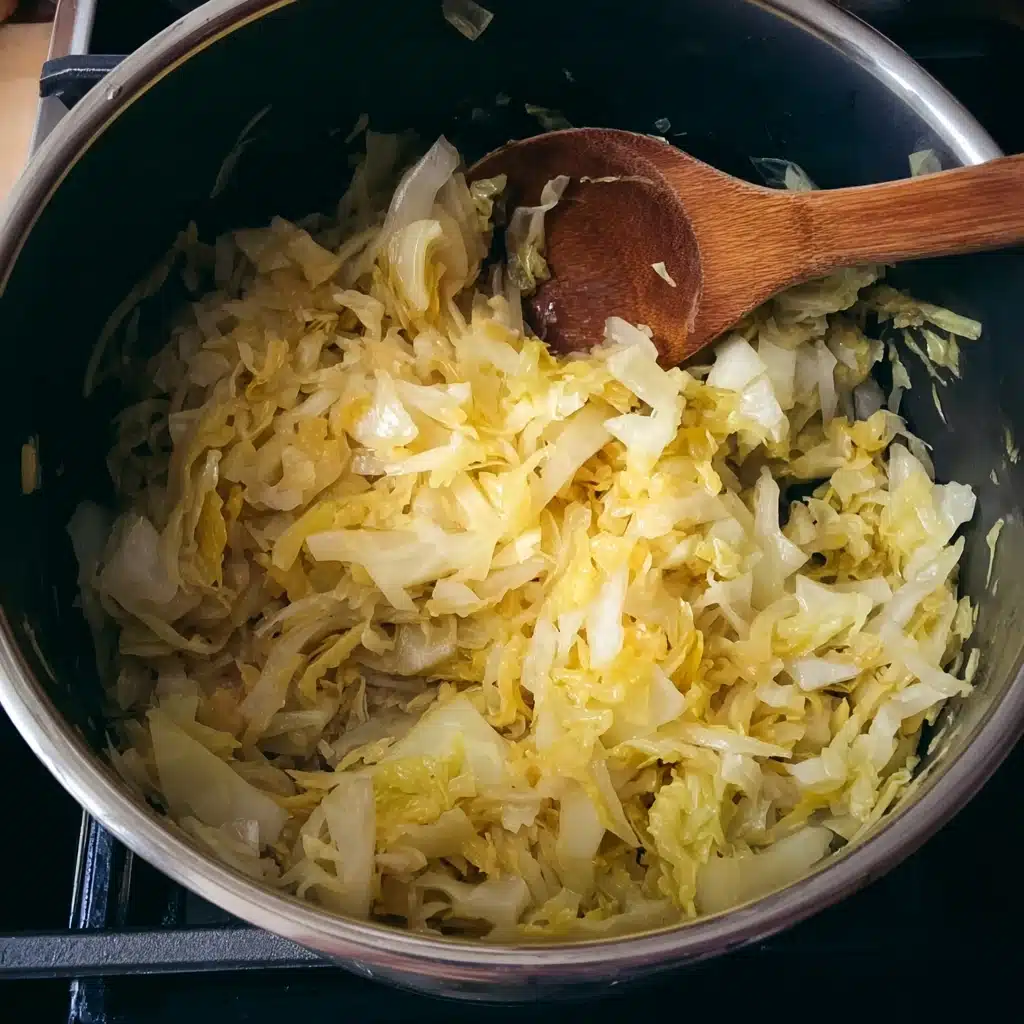
Homemade Sauerkraut in Its Own Brine is one of the simplest and most rewarding ways to preserve fresh cabbage while building deep flavor and natural probiotics. This recipe relies on time, salt, and patience rather than vinegar or shortcuts. As the cabbage ferments, it creates its own brine and develops the tangy bite people expect from authentic sauerkraut. With just a few ingredients and careful attention, you can make a crisp, clean-tasting ferment that fits naturally into everyday meals.
Story
Homemade Sauerkraut in Its Own Brine connects modern kitchens with generations of traditional food preservation. Long before refrigeration, families relied on cabbage fermentation to carry vegetables through winter. I learned Homemade Sauerkraut in Its Own Brine by watching how simple pressure and salt transformed raw cabbage into something complex and lively. This approach respects traditional sauerkraut methods while producing a reliable batch every time. When prepared slowly, Homemade Sauerkraut in Its Own Brine develops a clean sourness, balanced crunch, and the natural benefits found in probiotic sauerkraut.
Ingredients
This recipe uses everyday vegetables and spices that allow the cabbage to remain the focus. The combination supports fermented cabbage flavor without overpowering it.
-
3 1/4 lb green cabbage
-
1/2 lb carrots, grated
-
1 1/2 teaspoons Himalayan salt or fine sea salt
-
4–5 bay leaves
-
1 teaspoon whole black peppercorns
Step-by-Step Instructions
Clear steps and steady timing matter when working with cabbage fermentation, especially during the early days.
Preparing the Ingredients
Remove any damaged outer cabbage leaves, then finely shred the cabbage and place it in a large bowl with the grated carrots. Sprinkle the salt evenly over the vegetables and add the bay leaves and peppercorns, distributing everything by hand so the seasoning touches all surfaces.
Cooking Instructions
Massage and squeeze the cabbage mixture for several minutes until liquid releases and forms a natural brine. Cover the bowl with cheesecloth, place a weight on top, and leave it in a warm, dark spot for three days. Pack the cabbage tightly into a glass jar so the brine fully covers it, then ferment for three more days while releasing trapped gases daily. Refrigerate once the desired sourness develops.
Tips for Perfect Results
Small details make a noticeable difference in homemade fermented vegetables, especially texture and aroma.
Common Mistakes to Avoid
Do not allow cabbage to rise above the brine, as exposure to air leads to spoilage. Avoid iodized salt, metal containers, or rushed fermentation, since these interfere with proper bacterial growth and clean flavor development.
Pro Tips for Better Flavor
Shred cabbage evenly for consistent fermentation and press firmly when packing jars. If the kitchen runs cool, allow extra fermentation time so the sauerkraut develops depth without harsh acidity.
Serving and Storage
Once fermentation finishes, thoughtful handling keeps flavor steady and fresh.
How to Serve
Serve sauerkraut chilled or lightly warmed alongside sausages, roasted meats, grain bowls, or sandwiches. It also adds brightness to salads and simple vegetable plates.
How to Store Leftovers
Store sauerkraut in the refrigerator with the cabbage submerged in brine. Properly stored, it keeps its quality for up to two months without losing crunch.
Conclusion
Homemade Sauerkraut in Its Own Brine proves that traditional techniques still belong in modern kitchens. With cabbage, salt, and patience, you gain a flavorful ferment that supports balanced meals and long-lasting storage. Once you try this method, it becomes a dependable staple worth repeating.
Discover more delicious recipes by following me on Facebook and Pinterest.
Frequently Asked Questions
How long should sauerkraut ferment before refrigeration?
Fermentation usually takes three to six days depending on temperature and taste preference. Warmer kitchens speed sourness, while cooler spaces slow the process and create milder flavor.
Why must the cabbage stay under the brine?
Keeping cabbage submerged prevents unwanted bacteria from forming and allows beneficial fermentation to continue safely throughout the process.
Can I ferment sauerkraut longer for stronger flavor?
Yes, longer fermentation increases tanginess and depth. Taste daily after day three and refrigerate once the balance suits your preference.
Print
Homemade Sauerkraut in Its Own Brine
- Total Time: 3–6 days
- Yield: 8 servings 1x
- Diet: Vegan
Description
Homemade sauerkraut fermented naturally in its own brine using cabbage, carrots, salt, and spices for a crisp, tangy, probiotic-rich result.
Ingredients
- 3 1/4 lb green cabbage
- 1/2 lb carrots, grated
- 1 1/2 teaspoons Himalayan salt or fine sea salt
- 4–5 bay leaves
- 1 teaspoon whole black peppercorns
Instructions
- Remove any damaged outer leaves from the cabbage and finely shred it, then place in a large bowl with the grated carrots.
- Sprinkle the salt over the vegetables and add the bay leaves and peppercorns.
- Massage and squeeze the mixture for 5–10 minutes until enough liquid releases to form a natural brine.
- Cover the bowl with cheesecloth, add a weight, and leave in a warm dark place for 3 days.
- Pack the cabbage tightly into a glass jar so the brine completely covers it and place a weight on top.
- Pierce the cabbage once or twice daily for 3 days to release trapped gases, pressing it back under the brine each time.
- Taste the sauerkraut and refrigerate once the desired sourness is reached.
Notes
- Always keep the cabbage fully submerged in brine.
- Use non-iodized salt to avoid fermentation issues.
- Store refrigerated for up to 2 months.
- Longer fermentation results in stronger flavor and more probiotics.
- Prep Time: 20 minutes
- Cook Time: 0 minutes
- Category: Condiment
- Method: Fermenting
- Cuisine: German
Nutrition
- Serving Size: 1/2 cup
- Calories: 35
- Sugar: 4 g
- Sodium: 300 mg
- Fat: 0 g
- Saturated Fat: 0 g
- Unsaturated Fat: 0 g
- Trans Fat: 0 g
- Carbohydrates: 8 g
- Fiber: 4 g
- Protein: 2 g
- Cholesterol: 0 mg