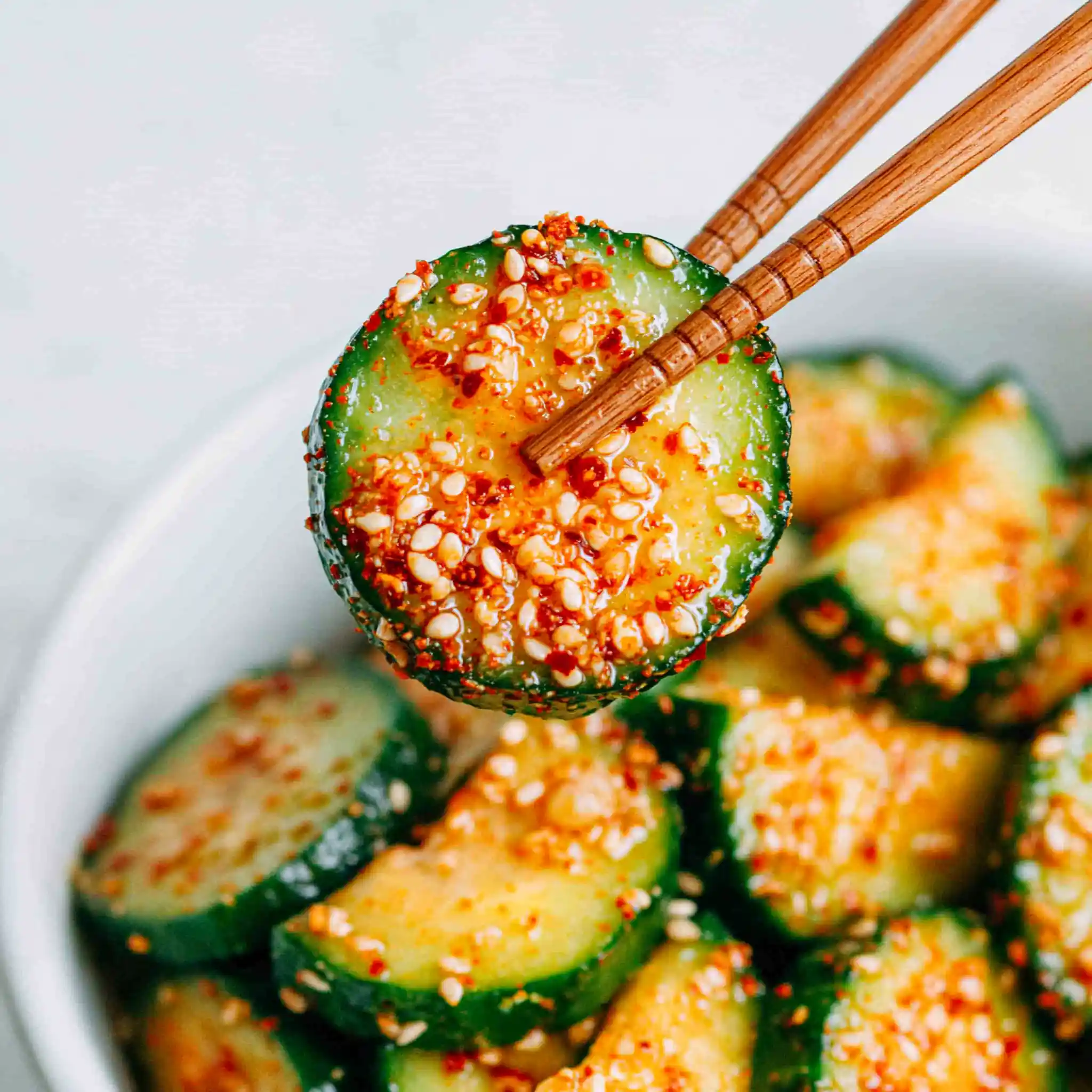
Korean Cucumber Salad Recipe is a crisp, flavorful side dish that brings together fresh cucumbers, savory seasonings, and a touch of heat in every bite. Known in Korea as Oi Muchim, this simple salad offers the perfect balance of tangy, slightly sweet, nutty, and mildly spicy flavors. Because it requires only a handful of ingredients and minimal preparation time, it fits easily into busy weeknight meal plans. Whether you serve it alongside grilled meats, seafood, rice bowls, or noodle dishes, this Korean cucumber salad recipe adds freshness and contrast that makes any meal more satisfying.
Story
Korean Cucumber Salad Recipe has earned a permanent place in my kitchen because it delivers bold flavor with very little effort. Whenever I prepare Korean-inspired meals, I include this refreshing side dish since it balances richer foods beautifully. The cucumbers stay crisp while the dressing coats every slice with tangy, savory, and slightly sweet flavor. In addition, the mild heat from gochugaru creates just enough spice without overpowering the dish. Since Korean Cucumber Salad Recipe comes together quickly and tastes wonderful chilled, it also works well for meal preparation. As a result, I return to this dependable recipe for casual lunches, family dinners, and weekend gatherings throughout the year.
Ingredients
| Ingredient | Amount |
|---|---|
| Persian cucumbers | 7 ounces (about 2 cucumbers or 1¾ cups sliced) |
| Salt | 1 teaspoon |
| Rice wine vinegar | 1 tablespoon |
| Gochugaru (Korean red pepper flakes) | 1¼ teaspoons |
| White sugar | 1 teaspoon |
| Sesame oil | 1 teaspoon |
| Finely minced garlic | ½ teaspoon |
| Sesame seeds | 1 teaspoon |
| Chopped green onion (optional) | 1 tablespoon |
Step-by-Step Instructions
Preparing the Ingredients
Begin by rinsing and drying the cucumbers thoroughly. Next, slice them into ¼-inch rounds and place them in a mixing bowl. Sprinkle the salt evenly over the cucumber slices and toss gently. Then transfer the cucumbers to a colander positioned over a bowl and let them rest for 30 minutes. During this time, the salt draws out excess moisture, which helps maintain a crisp texture. After resting, rinse the cucumbers under cold water for about 45 seconds and pat them dry carefully with paper towels. Once dry, place the cucumber slices into a clean mixing bowl and prepare the dressing.
Cooking Instructions
In a medium bowl, whisk together the rice wine vinegar, gochugaru, sugar, sesame oil, minced garlic, and sesame seeds until fully combined. Afterward, add the prepared cucumber slices and toss gently until every piece becomes coated with the dressing. If desired, stir in the chopped green onions for additional freshness. Serve the salad immediately for maximum crunch. Alternatively, chill it for a short period before serving if you prefer a colder and more refreshing side dish. Either way, the flavors blend quickly and create a delicious Korean cucumber salad recipe that complements many meals.
Tips for Perfect Results
Common Mistakes to Avoid
The most common mistake involves skipping the salting step. Although it may seem unnecessary, salting removes excess moisture and prevents a watery salad later. Likewise, insufficient rinsing after salting can leave the cucumbers overly salty. Another mistake involves squeezing the cucumber slices to remove water, which often damages their texture and reduces their crispness. Furthermore, thick-skinned cucumbers may produce a less pleasant texture than thinner varieties. Therefore, Persian, Kirby, or English cucumbers generally provide the best results. Paying attention to these simple details helps the salad maintain its refreshing crunch and balanced flavor.
Pro Tips for Better Flavor
For the most authentic taste, choose fresh cucumbers with firm texture and minimal seeds. If you enjoy additional heat, increase the gochugaru slightly. On the other hand, reduce the amount if you prefer a milder salad. Allowing the finished salad to sit for about five minutes before serving helps the flavors blend together more evenly. Additionally, a small amount of chopped green onion contributes freshness while extra sesame seeds add pleasant nuttiness. Because the ingredient list remains simple, using fresh, high-quality ingredients makes a noticeable difference in the final flavor.
Serving and Storage
How to Serve
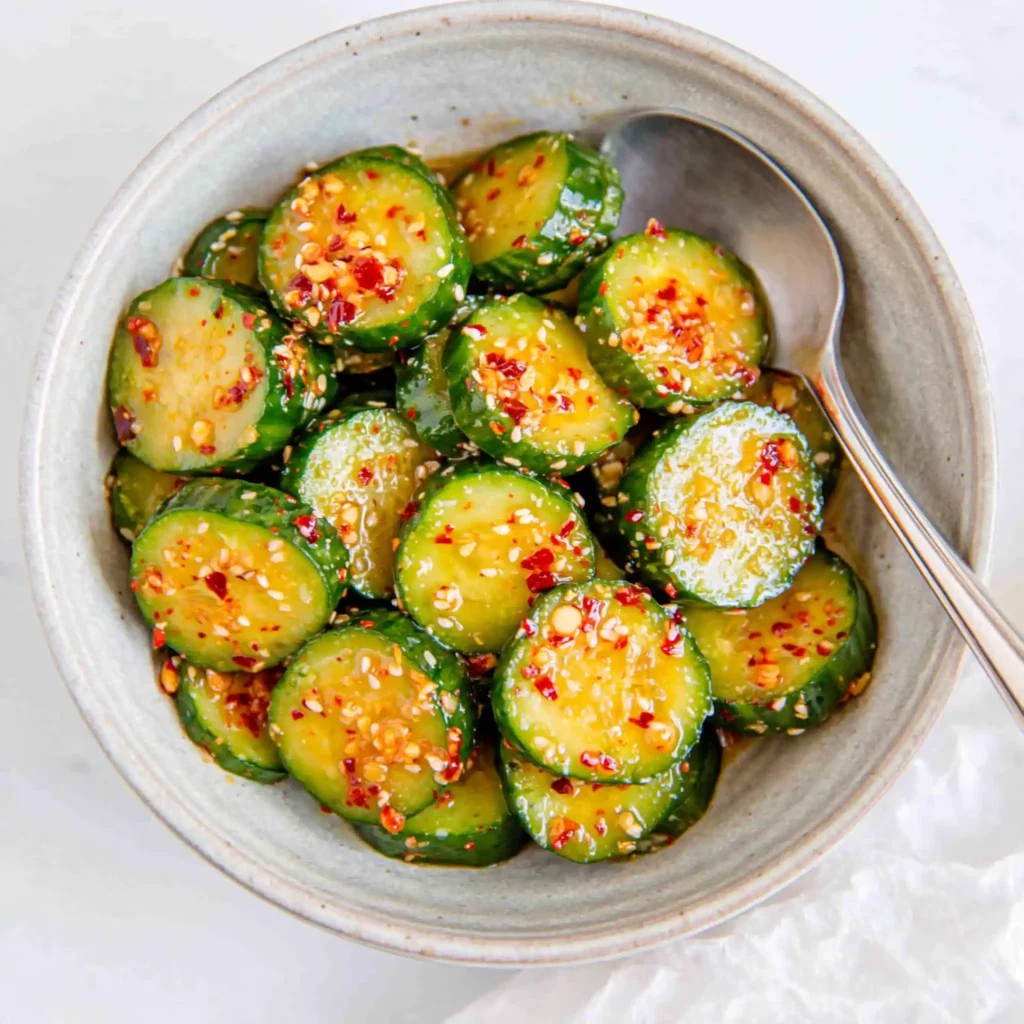
This Korean cucumber salad recipe pairs exceptionally well with Korean barbecue, grilled chicken, seafood, rice bowls, noodle dishes, and steamed rice. Its bright acidity balances rich proteins and hearty meals while adding a refreshing contrast. It also works beautifully as part of a larger collection of Korean side dishes. During warm weather, the chilled salad offers a cooling element that complements outdoor meals and grilled foods. Since the flavor remains light yet satisfying, it fits comfortably into both everyday dinners and special occasions.
How to Store Leftovers
Store any leftover salad in an airtight container in the refrigerator for up to three days. Although the cucumbers gradually soften over time, the flavor remains delicious. For the best texture, enjoy the salad within the first one to two days. Before serving leftovers, stir gently to redistribute the dressing and seasonings evenly. Avoid freezing the salad because cucumbers lose their crisp texture after thawing. Proper storage helps maintain freshness while allowing you to enjoy this convenient side dish throughout the week.
Conclusion
Korean Cucumber Salad Recipe proves that simple ingredients can create remarkable flavor. With crisp cucumbers, savory sesame oil, tangy vinegar, garlic, and Korean chili flakes, this traditional Oi Muchim offers freshness and balance in every bite. Because it requires little preparation and pairs with countless main dishes, it remains one of the easiest ways to add variety to a meal. Whether you serve it alongside grilled meats, seafood, noodles, or rice, this refreshing Korean side dish deserves a place in your regular recipe rotation.
Discover more delicious recipes by following me on Facebook and Pinterest.
Frequently Asked Questions
Can I use English cucumbers instead of Persian cucumbers?
Yes. English cucumbers work very well in this recipe because they have thin skins and relatively few seeds. If you use larger cucumbers with many seeds, remove the seeds before slicing to reduce excess moisture and maintain a crisp texture.
How spicy is Korean cucumber salad?
The spice level is generally mild to moderate. Gochugaru provides warmth and flavor without overwhelming heat. You can easily adjust the amount according to your personal preference and create a milder or spicier version.
Can I make Korean cucumber salad ahead of time?
Yes. You can prepare the salad several hours before serving and refrigerate it until needed. However, for the best texture and crunch, enjoy it within one day of preparation.
Print
Korean Cucumber Salad
- Total Time: 40 minutes
- Yield: 4 1x
- Diet: Vegetarian
Description
A quick and refreshing Korean side dish made with crisp cucumbers, sesame oil, garlic, rice vinegar, and gochugaru.
Ingredients
- 7 ounces Persian cucumbers (about 2 cucumbers or 1¾ cups sliced)
- 1 teaspoon salt
- 1 tablespoon rice wine vinegar
- 1¼ teaspoons gochugaru
- 1 teaspoon white sugar
- 1 teaspoon sesame oil
- ½ teaspoon finely minced garlic
- 1 teaspoon sesame seeds
- 1 tablespoon chopped green onion (optional)
Instructions
- Rinse and dry the cucumbers, then slice into ¼-inch rounds.
- Toss cucumbers with salt and place in a colander over a bowl for 30 minutes.
- Rinse cucumbers under cold water and pat dry.
- Whisk together vinegar, gochugaru, sugar, sesame oil, garlic, and sesame seeds.
- Add cucumbers and toss until coated.
- Stir in green onion if using.
- Serve immediately or chill briefly before serving.
Notes
- Do not skip the salting step.
- Use Persian, Kirby, or English cucumbers for best texture.
- Adjust gochugaru to taste.
- Best enjoyed within 1 to 2 days.
- Prep Time: 40 minutes
- Category: Side Dish
- Method: No-Cook
- Cuisine: Korean
Nutrition
- Serving Size: 1 serving
- Calories: 45
- Sugar: 2
- Sodium: 590
- Fat: 2
- Saturated Fat: 0
- Unsaturated Fat: 2
- Trans Fat: 0
- Carbohydrates: 5
- Fiber: 1
- Protein: 1
- Cholesterol: 0