
Every holiday table needs a hero. You know, the one dish that steals the spotlight and leaves everyone talking for weeks. And let’s be real—when it’s done right, homemade stuffing easily takes that crown. But what makes stuffing perfect? Is it the buttery bread? The fragrant herbs? The golden, crisp top with a soft center?
Well, here’s the deal: making the perfect homemade stuffing isn’t rocket science, but it does require a little know-how and a sprinkle of love. This guide walks you through everything you need—from ingredients to technique—so your stuffing isn’t just good… It’s unforgettable.
Introduction to Homemade Stuffing
The Significance of Stuffing in Holiday Meals
Let’s face it—stuffing isn’t just a side dish. It’s the backbone of Thanksgiving and holiday dinners. It’s what brings that nostalgic warmth, the “just like Grandma made” vibes, and the heavenly aroma that fills the entire house.
Whether you call it stuffing or dressing, it’s more than breadcrumbs and herbs. It’s a symbol of togetherness, family, and tradition. It has stood the test of time, evolving with each generation but always remaining a beloved staple.
Stuffing’s charm is its versatility. You can make it rustic or refined. Classic or creative. But at its core, it’s all about bringing simple ingredients together to create something deeply comforting and irresistibly delicious.
Overview of Crafting the Perfect Homemade Stuffing
So, how do you go from bland mush to golden perfection?
We’re talking:
-
The right type of bread—dried just enough to soak up all the goodness.
-
A medley of aromatic vegetables sautéed in just the right amount of fat.
-
A carefully measured pour of broth to bring it all together.
-
And finally, that expert balance of herbs and spices that makes every bite sing.
In this guide, you’ll get a full breakdown of every step and ingredient. We’ll also dive into different textures, cooking methods, common mistakes to avoid, and flavorful twists that make your stuffing truly your own.
Want it crispy on top and soft in the middle? Done. Need it vegetarian-friendly? Easy. Trying to impress your in-laws? We’ve got you.
We’re serving up all the details so you can confidently whip up a batch of perfect homemade stuffing—the kind that gets scraped clean every single time. Let’s dive right in.
Understanding Stuffing
What Is Stuffing?
Stuffing is a mix of bread, herbs, and veggies. It’s usually served with roasted meat, especially during the holidays. Many people place it inside the bird while cooking. Others bake it outside in a separate dish.
But where did stuffing come from? Well, it’s been around for centuries. Ancient Romans were already filling animals with seasoned mixtures. Over time, different cultures shaped it to fit their tastes.
Today, stuffing is still loved for its warm, cozy flavors. It’s hearty, easy to make, and rich with memories.
Stuffing vs. Dressing: What’s the Difference?
Some say “stuffing.” Others say “dressing.” Is there a real difference?
Not really—at least, not in ingredients.
Stuffing usually goes inside the bird.
Dressing is baked outside the bird in its dish.
In the southern U.S., “dressing” is the common name. Up north, “stuffing” is more popular. But no matter the name, both versions can be made with the same delicious mix of bread, broth, veggies, and herbs.
Why Stuffing Matters in Holiday Meals
Stuffing isn’t just about taste. It’s about comfort. Tradition. Home.
For many families, stuffing is the heart of the holiday meal. It brings people together. Everyone has a favorite version—maybe made with crusty bread, extra herbs, or a hint of sweetness.
Because it’s so flexible, stuffing fits into many holiday tables. Some folks stick with classic recipes. Others try bold new flavors. Either way, stuffing holds a special place in holiday food traditions.
How Stuffing Has Changed Over Time
Long ago, stuffing was mostly used to keep meat moist. It also added flavor. As cooking styles changed, so did stuffing.
Now, it’s often made on its own—crispy, golden, and full of flavor. Cooks add new twists: seasonal veggies, toasted nuts, or dried fruits. Even gluten-free and vegan stuffing recipes are more common.
Stuffing is no longer just a side dish. It’s a spotlight-stealer. And when it’s homemade? It’s pure magic.
Next up, we’ll break down the key ingredients that make your stuffing taste just right. From bread to broth to herbs—you’ll learn how each part makes a difference.
Essential Ingredients for Perfect Stuffing
Creating stuffing that’s full of flavor starts with the right ingredients. Each one has a job to do. Some add texture. Others boost taste. Let’s look at what you’ll need and why it matters.
Bread: The Foundation
Stuffing begins with bread. It soaks up all the other flavors. That’s why your choice of bread matters a lot.
Types of Bread to Use
The best stuffing uses bread with structure. That means firm and hearty. Some great options include:
-
French bread
-
Sourdough
-
Rustic country loaves
-
Cornbread (for Southern-style stuffing)
Soft sandwich bread? Skip it. It turns mushy and lacks depth.
Why Bread Should Be Dry or Stale
Fresh bread doesn’t work well. It’s too soft and wet. Dry bread holds its shape. It also soaks up the broth better.
To dry it:
-
Leave cubed bread out overnight.
-
Or, bake it in the oven at a low temp for 30–40 minutes.
This one step makes a huge difference.
Aromatic Vegetables
These veggies build flavor at the base. You’ll sauté them in butter before mixing them in.
Key Aromatics
The main ones are:
-
Onions
-
Celery
-
Garlic
Chop them small. Cook them until soft but not brown. This brings out their sweetness and aroma.
Herbs and Spices
Stuffing is nothing without herbs. They bring earthiness and warmth.
Best Herbs for Stuffing
Fresh is best, but dried can work, too. Try:
-
Sage (classic in most recipes)
-
Thyme
-
Parsley
-
Rosemary
These herbs are bold but not too strong. They blend well together.
Adding the Right Spices
You don’t need many spices. A bit of black pepper is plenty. Want extra depth? Add a pinch of nutmeg or poultry seasoning.
Liquids and Fats
Moist stuffing is key. That’s where liquids and fats come in.
Choosing a Broth
Use a good broth. Try:
-
Chicken broth
-
Turkey broth
-
Vegetable broth (for vegetarian options)
Skip plain water—it lacks flavor. Warm the broth before adding it. That helps it soak in better.
Butter and Other Fats
Butter adds richness. It helps sauté the veggies and coat the bread. If you need a dairy-free option, olive oil works too.
Use just enough to make things moist—not soggy.
Now that you know what to use, you’re one step closer to perfect stuffing. Up next, we’ll show you how to prep your bread the right way. Trust us, this part matters more than you think.
Preparing the Bread
Great stuffing starts with great bread. But even the best bread can turn mushy if it’s not prepped right. This step is key. Dry bread soaks up flavor better and keeps its shape. Let’s break it down.
Selecting the Right Bread
Not all bread works for stuffing. You want something sturdy—not too soft or airy.
Best Bread Types
Here are the top choices for homemade stuffing:
-
French bread
-
Sourdough
-
Country loaf
-
Cornbread (for a Southern touch)
-
Whole grain (adds a nutty flavor)
Avoid soft white bread. It breaks down too fast and gets soggy.
Texture Is Everything
The bread needs to be dry. If it’s too fresh, it won’t soak up the broth. Instead, it’ll just sit there and turn to mush.
You want cubes that hold together but still absorb flavor. That’s how you get a soft center with a crisp top.
Drying the Bread
This is one of the most important parts. Dry bread gives stuffing structure and soaks in all the broth and butter.
How to Dry Bread the Right Way
There are two easy methods:
-
Air-Dry Method
Cut the bread into small cubes. Leave them out on a baking sheet overnight, uncovered. This works best if you’re not in a rush. -
Oven-Dry Method
Preheat your oven to 250°F (120°C). Spread the cubes on a tray. Bake for 30–40 minutes, stirring halfway through. Let them cool before using.
Both ways work well. The goal is dry, crisp bread—not toasted or brown.
Cube Size Matters
Cut the bread into ½-inch to 1-inch cubes. Smaller cubes soak up more broth. Bigger ones keep a firmer bite. Pick what you prefer.
Once your bread is ready, you’ve got the base for amazing stuffing. Up next, you’ll cook the veggies and herbs. That’s where the flavor starts to shine.
Sautéing the Aromatics
Now that your bread is ready, it’s time to build flavor. The secret? Cooking the vegetables and herbs just right. This step gives stuffing its deep, savory taste. Don’t skip it.
Cooking Onions and Celery
These two veggies are the backbone of stuffing. They add both flavor and moisture.
How to Cook Them Properly
-
Chop them small and evenly.
-
Use a large skillet.
-
Melt butter over medium heat.
-
Add onions and celery. Stir often.
Cook them until soft—about 8 to 10 minutes. Don’t let them brown. You want them tender, not crispy. That way, they blend smoothly into the bread.
Why This Step Matters
Raw veggies won’t work. They stay crunchy and don’t release flavor. Soft, sautéed onions and celery give stuffing that comforting, melt-in-your-mouth texture.
Adding Garlic and Herbs
Garlic and herbs add depth. A little goes a long way, so don’t overdo it.
When to Add Garlic
Garlic cooks fast. Add it after the onions and celery are soft. Stir for just 30 to 60 seconds. When you smell it, it’s done. Burnt garlic tastes bitter—so be quick.
Fresh vs. Dried Herbs
Both work. But fresh herbs give a brighter flavor. Use what you have on hand.
Good choices include:
-
Sage
-
Thyme
-
Parsley
-
Rosemary
Add herbs during the last minute of cooking. This helps release their oils and boosts their aroma.
Mixing in Butter and Flavor
The butter you cook with now will coat the bread later. It also helps carry the herb flavor.
Butter Tips
-
Use unsalted butter so you can control the salt.
-
Melt it slowly so it doesn’t brown too fast.
-
Stir often to prevent burning.
The result? A rich, fragrant veggie mix that’s packed with flavor. It’s ready to bring your stuffing to life.
Next, we’ll show you how to mix it all together—bread, veggies, broth, and more. This step brings everything into balance.
Combining Ingredients
Now comes the fun part. It’s time to mix everything together. This step turns simple ingredients into something rich, soft, and full of flavor.
Mixing Bread with Aromatics
The bread and cooked veggies need to blend well. You want every bite to taste great.
How to Combine Them Right
-
Place the dried bread cubes in a large bowl.
-
Pour the warm veggie and butter mix over the top.
-
Stir gently with a spoon or clean hands.
You don’t want to crush the bread. Just mix until the veggies are spread evenly.
Let the Flavors Soak In
Wait 5–10 minutes before adding the broth. This short pause lets the warm butter start softening the bread. It also helps the herbs stick to the cubes.
Adding Liquids and Eggs
Broth and eggs help the stuffing stay moist and hold together. But it’s all about balance.
Using the Right Amount of Broth
Add broth slowly. Start with ½ cup at a time.
-
Stir gently after each pour.
-
Stop when the bread feels damp but not soggy.
You want it soft—not swimming in liquid. A good sign? Press a handful, and it should holdits shape but not drip.
Why Eggs Matter
Eggs act like glue. They hold everything together. They also add richness.
Use 1–2 beaten eggs for most recipes. Pour them in last, after the broth. Stir gently to spread them through the mix.
Don’t Overmix
Too much mixing breaks the bread down. Stir just enough to blend the eggs and broth in evenly.
Let It Sit Before Baking
After everything is mixed, let the bowl sit for 10 minutes. This gives the bread time to soak up all the flavors.
The result? Stuffing that’s soft inside, crisp on top, and full of taste.
You’re almost there! Next, you’ll bake it to golden perfection. We’ll cover the two best cooking methods and how to get the ideal texture.
Cooking Methods
You’ve mixed the stuffing. Now it’s time to cook it. This step brings everything together. Done right, the top turns golden and crisp while the inside stays soft and flavorful.
Baking Separately vs. Stuffing the Bird
There are two ways to cook stuffing. One is baking it in a dish. The other is stuffing it inside the bird. Each method has pros and cons.
Baking in a Dish
This is the most popular method.
Why it works:
-
It’s easy to check if it’s done.
-
You get a crisp top and soft middle.
-
It cooks faster and more evenly.
How to do it:
-
Grease a baking dish.
-
Spread the stuffing evenly.
-
Cover with foil and bake at 350°F (175°C) for 25–30 minutes.
-
Remove the foil and bake for another 15–20 minutes to crisp the top.
This method gives you full control over texture.
Stuffing Inside the Bird
Some people love this classic method. But it takes more care.
Pros:
-
The stuffing absorbs juices from the bird.
-
It tastes extra rich and savory.
Cons:
-
It cooks slower.
-
It must reach 165°F (74°C) to be safe to eat.
-
If not done right, it can cause food safety issues.
If you go this route, use a thermometer. Check the center of the stuffing. Make sure it’s fully cooked before serving.
Tips for Perfect Texture
Whether you bake it in a dish or inside the bird, texture matters.
For a Crispy Top
-
Use a shallow dish to let more of the surface brown.
-
Bake uncovered for the last 15–20 minutes.
-
Broil for 2 minutes if you want it extra crisp (but watch it closely).
For a Moist Center
-
Don’t skimp on broth.
-
Cover the dish during the first half of baking.
-
Let the stuffing rest for 10 minutes before serving. This helps it set and stay soft inside.
Next, we’ll explore tasty add-ins and unique versions that make your stuffing stand out. From sweet bites to hearty extras, there are lots of fun ways to mix it up.
Variations and Additions
Want to make your stuffing stand out? You’re in the right place. Small changes can take it from basic to bold. Let’s explore some fun ways to mix things up.
Incorporating Meats
Adding meat brings a rich, hearty flavor. It makes stuffing more filling, too.
Tasty Options
-
Cooked chicken: It adds protein and blends well.
-
Ground turkey: Brings flavor and keeps it lean.
-
Turkey giblets: Common in traditional recipes.
Always cook meat before adding it to the stuffing mix. Raw meat won’t fully cook inside the dish.
How to Add Meat
-
Cook it in a skillet with your veggies.
-
Crumble or chop it into small bits.
-
Mix it evenly into the bread mixture.
This adds flavor to every bite.
Adding Fruits and Nuts
Looking for sweet or crunchy bites? Fruits and nuts add a fun twist.
Popular Add-ins
-
Apples: Dice small for juicy sweetness.
-
Dried cranberries: Bring a tart pop.
-
Raisins: Add soft texture and mild sweetness.
-
Pecans or walnuts: Give a nutty crunch.
Add fruit and nuts after mixing in the broth. This keeps their texture just right.
Exploring Regional Variations
Different parts of the world (and country) have their own stuffing styles. Trying one of these can bring new life to your dish.
Cornbread Stuffing
A Southern classic. Use crumbled cornbread instead of bread cubes. Add cooked onions, celery, and herbs. It’s rich, moist, and a little sweet.
Oyster Stuffing
A coastal favorite. Use shucked oysters for a bold flavor. Add parsley, celery, and breadcrumbs. This version is moist and full of umami.
Wild Rice Stuffing
A great gluten-free option. Use cooked wild rice or a rice blend. Mix with mushrooms, nuts, and herbs. It’s earthy and hearty.
Customizing Your Way
The best part about stuffing? You can make it your own. Swap herbs. Try new mix-ins. Adjust the texture.
Test different versions until you find your favorite. Or make more than one—because who says there can only be one perfect stuffing?
Now that you’ve seen how to level up your stuffing, it’s time to talk about common mistakes. We’ll also cover how to fix them fast.
Common Mistakes and Troubleshooting
Even the best cooks slip up sometimes. But don’t worry—stuffing is easy to fix. Let’s look at common problems and how to fix them fast.
Overcoming Dry or Soggy Stuffing
Too dry? Too wet? It happens. The key is getting the moisture just right.
What Causes Dry Stuffing?
-
Not enough broth
-
Bread that’s too hard
-
Baking too long or at too high a heat
Fix it:
-
Add warm broth a little at a time.
-
Cover with foil and bake for 10 more minutes.
-
Let it rest so the bread softens.
What Causes Soggy Stuffing?
-
Too much liquid
-
Not drying the bread enough
-
Bake at a low temperature without crisping the top
Fix it:
-
Spread it out in a thinner layer.
-
Bake uncovered to dry it out.
-
Use a higher heat or a short broil to firm it up.
Avoiding Bland Flavors
Stuffing should be bold, not boring. If it tastes flat, don’t panic.
Reasons Stuffing Can Taste Bland
-
Not enough salt
-
Skipping the herbs
-
Weak broth
-
Not sautéing the veggies long enough
Fix it:
-
Add extra fresh herbs or a sprinkle of salt.
-
Drizzle a bit of seasoned broth on top.
-
Mix in cooked mushrooms or garlic for a flavor boost.
-
A tiny bit of lemon zest can brighten it up, too.
Fixing Texture Problems
Sometimes the stuffing just feels off.
Too Dense or Mushy?
-
Too much liquid or overmixing can break the bread.
-
Use lighter mixing and less broth next time.
Falls Apart When Served?
-
Not enough binder.
-
Add another egg next time for better hold.
No stuffing is perfect every time, but with these tips, yours will come close. In the next part, we’ll talk about serving ideas and what goes best with your perfect homemade stuffing.
Serving and Pairing
You’ve made the stuffing. It smells amazing. Now, let’s talk about how to serve it and what goes well with it. A little care here makes a big difference.
Presentation Tips
Looks matter, too. A good-looking dish gets more “wow” at the table.
How to Make It Look Great
-
Use a pretty baking dish.
-
Top with fresh herbs like parsley or thyme.
-
Add a few golden bread cubes on top for color.
Want to get fancy? Serve in individual ramekins. Everyone gets their crispy edge.
Keep It Warm
Stuffing cools fast. Cover it with foil if it’s waiting to be served. You can also reheat it in the oven at 300°F (150°C) for 10–15 minutes.
Pairing with Main Courses
Stuffing goes with almost anything. But some pairings are classic.
Best Meat Pairings
-
Roast turkey – A holiday must-have.
-
Roast chicken – This is Great for smaller meals.
-
Grilled or roasted vegetables – They keep it light but tasty.
Want to keep it vegetarian? Serve it with roasted squash, green beans, or mashed potatoes. The herbs in the stuffing match well with earthy sides.
Gravy or No Gravy?
Stuffing shines with or without gravy. But if it’s a little dry, gravy helps. Just don’t drown it. A small spoonful is enough.
When to Serve Stuffing
It’s not just for the holidays. Stuffing works for:
-
Family dinners
-
Potlucks
-
Sunday roasts
-
Comfort food cravings
Change the add-ins to match the season. Add apples in the fall or fresh herbs in spring. It always works.
Now that you know how to serve it, let’s look at the most asked questions about stuffing. From prep to storage, we’ve got the answers you need.
Frequently Asked Questions
People have lots of questions about stuffing. Let’s simply answer the most common ones.
Can I make the stuffing ahead of time?
Yes, you can.
Make it a day early, but don’t bake it yet. Cover and store it in the fridge. When you’re ready, bake it as usual. Add a little warm broth if it feels dry before baking.
Can I freeze leftover stuffing?
Absolutely.
Cool it first. Then, put it in an airtight container. You can freeze it for up to 3 months. Reheat in the oven at 325°F (165°C) until warm. Add a splash of broth to keep it moist.
How do I make gluten-free stuffing?
Just swap the bread.
Use gluten-free bread or cornbread. Make sure your broth and seasonings are also gluten-free. The rest of the steps are the same.
Is it safe to cook stuffing inside the turkey?
Yes, but be careful.
The stuffing must reach 165°F (74°C) to be safe. Use a food thermometer to check. If the turkey is done, but the stuffing isn’t, take the stuffing out and finish it in the oven.
Why does my stuffing taste bland?
You might need more flavor.
Try adding more herbs like sage or thyme. Use a rich broth. Don’t forget salt and pepper. Sauté the veggies well to bring out their taste. You can also mix in roasted garlic or mushrooms.
What’s the best bread for stuffing?
Go for firm, crusty bread.
French bread, sourdough, or rustic loaves work great. Avoid soft sandwich bread—it gets mushy. Dry your bread cubes before mixing so they soak up all the flavor.
With these answers, you’ll feel more confident in the kitchen. Let’s finish strong with a quick wrap-up of everything you’ve learned about making perfect homemade stuffing.
Conclusion
You’ve made it through the full guide. By now, you know how to make perfect homemade stuffing—from the first cube of bread to the last crispy bite.
It all starts with good, dry bread. That’s your base. Then come the veggies, herbs, and broth. Together, they build rich flavor. Add eggs for hold. Bake until the top is golden and the inside is soft.
Want to change it up? Toss in apples, nuts, or cooked meat. Try new herbs. Make it gluten-free. Stuffing is easy to make your own.
Remember, it doesn’t have to be perfect the first time. Each batch teaches you more. Try different textures. Taste as you go. Soon, you’ll have a version your friends and family ask for every year.
Stuffing isn’t just food. It’s comfort. It’s memories. It’s home on a plate.
Now, it’s your turn—grab that bowl, prep your bread, and make your best stuffing yet.
Print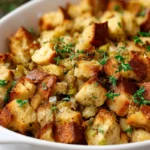
Perfect Homemade Stuffing: The Ultimate Guide for Flavorful, Fluffy Success
- Total Time: 1H20M
- Yield: 8 servings 1x
- Diet: Vegetarian
Description
Perfect Homemade Stuffing is a comforting mix of dried bread cubes, sautéed vegetables, savory herbs, and rich broth baked until golden on top and fluffy inside. Whether for Thanksgiving, Sunday dinner, or a cozy weeknight meal, this classic side dish brings warmth and flavor to every bite. It’s easy to adapt to and even easier to love.
Ingredients
-
1 loaf (about 1 lb) French bread or sourdough, cubed and dried
-
1 cup unsalted butter (or olive oil for dairy-free)
-
2 cups diced onion (about 2 medium)
-
1 ½ cups diced celery (about 3 stalks)
-
3 cloves garlic, minced
-
2 teaspoons chopped fresh sage (or 1 tsp dried)
-
1 teaspoon chopped fresh thyme (or ½ tsp dried)
-
1 tablespoon chopped fresh parsley
-
1 teaspoon salt (more to taste)
-
½ teaspoon ground black pepper
-
2 ½ to 3 cups low-sodium chicken broth (or vegetable broth for vegetarian)
-
2 large eggs, beaten
Instructions
-
Preheat oven to 350°F (175°C). Grease a 9×13-inch baking dish.
-
Dry the bread: If not already dry, cube bread and bake on a sheet at 250°F (120°C) for 30–40 minutes until crisp. Cool.
-
Sauté vegetables: In a large skillet, melt butter over medium heat. Add onions and celery. Cook for 8–10 minutes, stirring often, until soft. Add garlic and cook 1 minute more.
-
Add herbs and seasoning: Stir in sage, thyme, parsley, salt, and pepper. Remove from heat.
-
Mix stuffing: In a large bowl, combine dried bread cubes and cooked vegetables. Toss gently.
-
Add broth and eggs: Pour in broth gradually while stirring. Add just enough to moisten bread. Stir in beaten eggs.
-
Transfer to baking dish: Spread stuffing evenly in the dish. Cover with foil.
-
Bake covered for 30 minutes. Remove foil and bake another 15–20 minutes until the top is golden and crisp.
-
Let rest for 5–10 minutes before serving.
Notes
For extra texture, add chopped apples, dried cranberries, nuts, or cooked sausage.
Make-ahead: Assemble and refrigerate overnight before baking. Add 5–10 minutes to the bake time if the dough is cold.
To bake inside poultry, ensure stuffing reaches 165°F (74°C) for safety.
- Prep Time: 30M
- Cook Time: 50M
- Category: Side Dish
- Method: Baking
- Cuisine: American