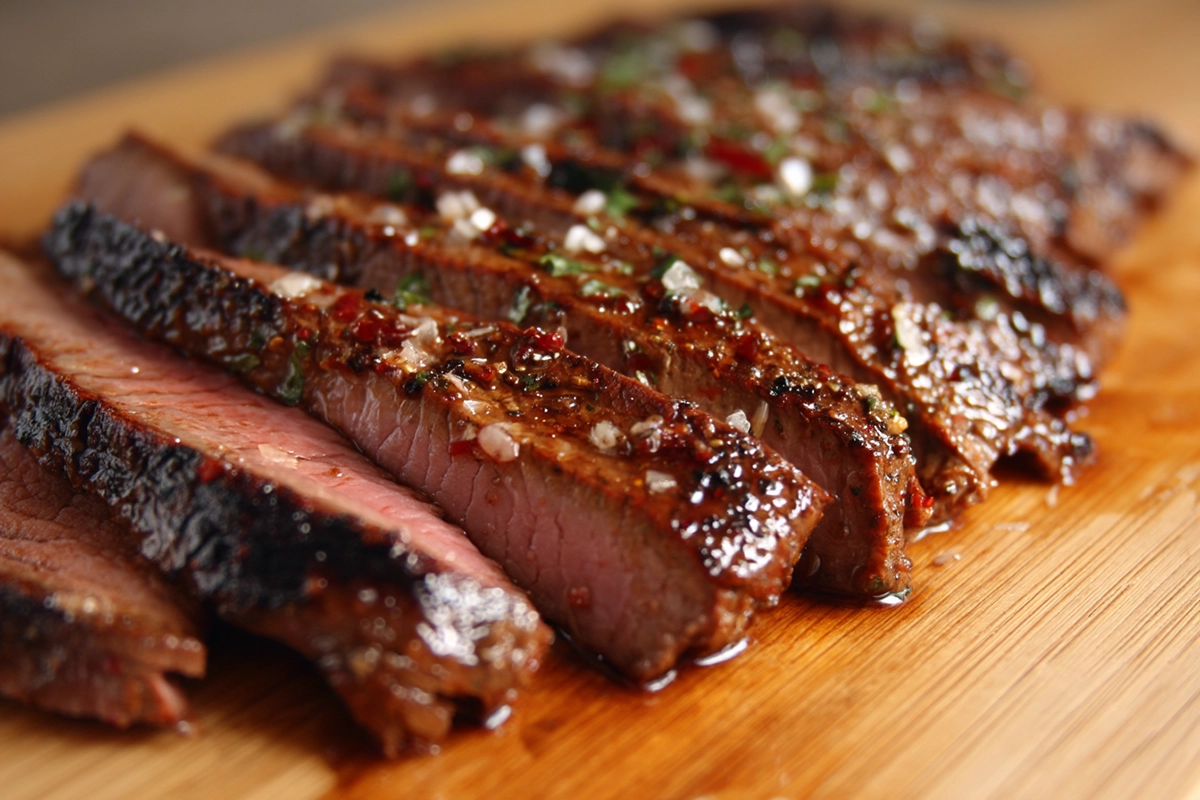
There’s something deeply satisfying about sinking your teeth into a juicy, flavorful slice of steak. Marinated flank steak brings that satisfaction to a whole new level. With the right balance of ingredients, this lean cut transforms into a tender, bold, and unforgettable centerpiece. Whether you’re grilling outdoors or searing on a stovetop, mastering this dish is easier than you think.
This guide breaks it all down. From the basics of flank steak and why marinating works wonders to tips that help elevate your home-cooked meal into something truly special — you’ll find everything you need right here. Let’s dive in.
What is Marinated Flank Steak?
Definition and Overview
Flank steak is a long, flat cut of beef that comes from the abdominal muscles of the cow. It’s known for its strong beefy flavor and low fat content. On its own, it can be a little tough, but once marinated, it becomes rich, juicy, and easy to chew.
This cut is often overlooked for more tender steaks, but that’s changing. With the right marinade and cooking method, flank steak can compete with the best cuts in both flavor and tenderness.
Importance of Marinating Flank Steak
The marination process isn’t just about flavor. It’s about chemistry. The acids in a marinade help break down tough muscle fibers, making the meat softer. Meanwhile, the oils carry in herbs and spices, infusing every bite with layers of taste.
Time also plays a role. The longer the steak sits in the marinade — up to a point — the deeper the flavor goes. That’s why even a lean cut like flank steak can end up melt-in-your-mouth delicious if prepared the right way.
Brief History and Popularity
Historically, flank steak was considered a cheaper, secondary cut. But in many cultures, especially Latin American and Asian cuisines, it has always been prized for its intense flavor and quick cooking time. Over the years, its popularity has grown among chefs and home cooks alike, especially for grilling and quick meals that don’t skimp on taste.
Today, you’ll find flank steak on menus around the world, often served sliced thin and bursting with the flavors of a bold, homemade marinade.
Understanding Flank Steak
Anatomy and Characteristics
Location on the Cow
Flank steak comes from the lower chest or belly area of the cow. It is a long, flat cut. The muscle here does a lot of work, so it’s lean and firm. It doesn’t have much fat, which is why it can be tough if cooked wrong.
Texture and Flavor Profile
This cut has a strong beef flavor. It’s lean but still juicy when cooked right. The meat has visible grains running through it. That’s why slicing it thin — and against the grain — is so important. It helps keep each bite tender.
Common Uses in Cooking
Many people love flank steak for grilling. But you can also broil it or pan-sear it. It’s great in tacos, fajitas, salads, or stir-fry. Because it’s flat and thin, it cooks fast. That makes it perfect for weeknight dinners or summer cookouts.
Flank Steak vs. Other Cuts
Flank Steak vs. Skirt Steak
These two cuts look alike. Both are flat and lean. But skirt steak comes from a different part of the cow — the diaphragm. It’s a bit fattier and even more flavorful. Skirt steak is also thinner and cooks quickly.
Flank steak is a little thicker and has a tighter grain. It holds marinades well and is easier to slice cleanly.
Flank Steak vs. Flat Iron Steak
Flat iron steak comes from the shoulder. It has more marbling, so it’s more tender without a marinade. It’s also thicker and smaller in shape.
Flank steak is longer, thinner, and needs a marinade to become tender. But it’s just as tasty when cooked right and sliced thin.
The Science of Marination
Components of an Effective Marinade
Acids
Acids help soften the meat. They break down the tough fibers. This makes each bite easier to chew. Common acids include lemon juice, vinegar, and lime juice. These also add a bright, tangy taste.
Oils
Oil helps carry flavor. It also keeps the meat moist while it cooks. Olive oil is a great pick. It blends well with herbs and spices. Oil also creates a nice crust when the steak is grilled or seared.
Aromatics and Herbs
These are your flavor boosters. Garlic, onions, chili, or fresh herbs work well. You can also use dried herbs. Think rosemary, thyme, or oregano. These mix with oil and acid to create deep flavor.
Sweeteners
Sugar helps with browning. It gives the steak a light crust. You can use brown sugar, honey, or maple syrup. A little goes a long way. It balances the tang from the acid and adds depth.
Marination Techniques
Duration
Don’t marinate it too long. Two to four hours is often enough. You can also marinate it overnight if you want more flavor. But avoid going past 24 hours. The meat may turn mushy.
Methods
Place the steak in a plastic bag or dish. Make sure it’s fully covered. Turn it halfway through if needed. You can also use vacuum sealers. These help the marinade soak in faster.
Keep the steak in the fridge while it marinates. Always throw out used marinade. Or boil it first if you want to reuse it as a sauce.
Crafting the Perfect Flank Steak Marinade
Classic Marinade Recipe
Ingredients
Here’s a simple list of what you’ll need:
-
1/4 cup soy sauce
-
1/4 cup olive oil
-
2 tablespoons lime juice
-
2 tablespoons brown sugar
-
3 cloves garlic, minced
-
1 teaspoon ground black pepper
-
1 teaspoon onion powder
-
1/2 teaspoon chili flakes (optional)
Preparation Steps
-
Take a bowl.
-
Mix all the ingredients.
-
Stir until the sugar is dissolved.
-
Place the steak in a zip bag or shallow dish.
-
Pour the marinade over it.
-
Seal or cover.
-
Put it in the fridge.
-
Let it rest for at least 2 hours.
Turn the steak once during this time to coat both sides well.
Variations and Global Flavors
Asian-Inspired Marinade
-
Use soy sauce, sesame oil, garlic, and ginger.
-
Add a splash of lime juice or rice vinegar.
-
Great for stir-fry or rice bowls.
Latin American Flavors
-
Mix lime juice, olive oil, cumin, garlic, and chili powder.
-
You can also add a bit of fresh cilantro.
-
This one is bold and smoky.
Mediterranean Style
-
Blend olive oil, lemon juice, garlic, and oregano.
-
Add a little salt and pepper.
-
Simple, fresh, and full of herbs.
Each of these marinades brings out new flavors in the meat. Pick the one that fits your meal best. Or mix things up and try something new next time.
Cooking Techniques for Marinated Flank Steak
Grilling
Preparing the Grill
Use a clean grill. Preheat it to high heat. You want it very hot before the steak goes on.
If you’re using charcoal, wait until the coals turn white. For gas grills, close the lid while it heats up.
Grilling Steps
-
Take the steak out of the fridge.
-
Let it sit for 20 minutes.
-
Place it on the hot grill.
-
Cook for 4 to 5 minutes on one side.
-
Flip and cook the other side the same way.
-
Use a meat thermometer if needed.
-
Aim for 130°F for medium rare.
Resting and Slicing
Let the steak rest for 5 to 10 minutes. This keeps the juices in. Then, slice it thin and against the grain. This makes it tender and easy to chew.
Pan-Searing
Equipment Needed
Use a cast-iron pan or any heavy skillet. Make sure it’s hot before adding the steak. Use a bit of oil to keep it from sticking.
Cooking Process
-
Heat the pan until very hot.
-
Add oil and swirl it around.
-
Place the steak flat in the pan.
-
Cook for 4 to 5 minutes on each side.
-
Let it rest before slicing.
This gives a crispy outside and a juicy inside.
Broiling
Oven Setup
Move the oven rack near the top. Turn on the broiler. Line a tray with foil and set a wire rack on top.
Broiling Steps
-
Place the steak on the rack.
-
Slide it into the oven.
-
Broil for 4 to 6 minutes per side.
-
Watch it closely to avoid burning.
-
Rest and slice once done.
Broiling is fast and works well if you don’t have a grill.
Serving Suggestions
Side Dishes
Vegetables
Grilled vegetables go great with flank steak. Try bell peppers, zucchini, or asparagus. You can also roast carrots or broccoli. A light salad works, too. Keep the flavors simple to let the steak shine.
Grains
Rice is always a good pick. Brown rice, jasmine rice, or wild rice all work. You can also serve the steak with quinoa or couscous. These grains soak up the steak juices and add texture.
Mashed or baked potatoes are also filling and tasty. They’re perfect if you want something rich and warm.
Sauces and Toppings
Chimichurri
This sauce is fresh and bold. It’s made with parsley, garlic, olive oil, and vinegar. Add a bit of salt and pepper. Spoon it over the sliced steak. It adds a pop of color and flavor.
Salsas
Fresh salsa is another great choice. Use diced tomatoes, onions, lime juice, and herbs. You can also try mango or pineapple salsa for something sweet and spicy.
Presentation Tips
Plating
Cut the steak into thin slices. Lay the slices across the plate. Place sides neatly around the meat. A clean white plate helps the colors pop.
Garnishing
Top with chopped parsley or green onions. A slice of lime on the side adds a fresh look. Keep it simple, clean, and colorful.
Storage and Reheating
Storing Leftovers
Refrigeration
Put leftover steak in an airtight container. You can also wrap it in foil or plastic. Keep it in the fridge for up to 3 days. Always let the steak cool before storing it.
Freezing
You can freeze cooked flank steak. Wrap it tightly in foil or use a freezer bag. Label it with the date. It stays good for about 2 months. For best results, slice the steak before freezing.
Reheating Methods
Oven
Preheat your oven to 250°F (120°C). Place steak slices in a baking dish. Cover with foil to hold in moisture. Heat for 10 to 15 minutes. Check to make sure it’s warm but not dry.
Stovetop
Use a pan over low heat. Add a small splash of water or broth. This keeps the meat soft. Cover the pan with a lid. Warm for a few minutes, turning once.
Microwave (if needed)
Use this only if you’re in a hurry. Place slices on a plate. Cover with a damp paper towel. Heat for 30–60 seconds. Watch closely to avoid drying it out.
Always avoid overcooking when reheating. Warm it just enough to enjoy again.
Frequently Asked Questions (FAQ)
Can I marinate flank steak overnight?
Yes, you can. Overnight marination helps the steak soak up more flavor. But don’t go over 24 hours. Too much time can make the meat mushy.
What’s the best way to tenderize flank steak?
Use a marinade with acid like lemon juice or vinegar. Slice the meat against the grain after cooking. This helps break up the tough muscle fibers.
How long should I cook flank steak?
For medium rare, cook 4 to 5 minutes per side. Use high heat. A meat thermometer should read about 130°F (55°C). Always let it rest before cutting.
Can I use the marinade as a sauce?
It works only if you boil it first. This kills any bacteria from the raw meat. You can also make a fresh batch of the same sauce just for serving.
Is flank steak good for slow cooking?
Yes, but it’s not the most common method. Flank steak cooks fast. Still, you can use it in stews or slow-cooked dishes if you slice it thin after cooking.
Should I bring the steak to room temperature before cooking?
Yes. Let it sit out for 20 to 30 minutes. This helps it cook more evenly and gives better results.
Can I freeze raw marinated flank steak?
Yes. You can freeze it with the marinade in a sealed bag. It will stay good for up to 3 months. Thaw in the fridge before cooking.
Conclusion
Marinated flank steak is full of flavor. It’s easy to make. You just need the right marinade and a hot grill or pan.
This cut is lean but tasty. With a few simple steps, it becomes soft, juicy, and perfect for any meal.
Try different marinades. Pick sides that match your taste. Slice it thin and serve it fresh.
Now you know how to make it right — from start to finish. It’s a dish that works for any season, any table, and any cook.
Give it a try. You’ll be glad you did.
Print
Marinated Flank Steak: The Ultimate Guide to Flavor and Tenderness
- Total Time: 20 minutes (plus marination time)
- Yield: 4 servings 1x
- Diet: Low Fat
Description
Marinated flank steak is a lean, flavorful cut of beef that becomes tender and juicy with the right marinade. With just a few simple ingredients and cooking techniques, you can transform this budget-friendly cut into a bold and satisfying centerpiece. It’s perfect for grilling, pan-searing, or broiling, and pairs well with a wide range of sides and sauces.
Ingredients
For the Classic Marinade:
-
1/4 cup soy sauce
-
1/4 cup olive oil
-
2 tablespoons lime juice
-
2 tablespoons brown sugar
-
3 garlic cloves, minced
-
1 teaspoon black pepper
-
1 teaspoon onion powder
-
1/2 teaspoon chili flakes (optional)
For the Steak:
-
1 1/2 to 2 pounds of flank steak
Instructions
-
In a bowl, whisk together all marinade ingredients until sugar dissolves.
-
Place flank steak in a zip-top bag or shallow dish.
-
Pour marinade over the steak. Seal the bag or cover the dish.
-
Refrigerate for at least 2 hours or overnight (max 24 hours).
-
Remove steak from fridge 20 minutes before cooking.
-
Preheat grill, skillet, or broiler to high heat.
-
Cook steak 4–5 minutes per side for medium-rare (130°F).
-
Let rest for 5–10 minutes.
-
Slice thinly against the grain and serve.
Notes
Don’t over-marinate. It can make the steak mushy.
Always slice against the grain for tenderness.
You can freeze the raw steak in marinade for up to 3 months.
Try different global marinades (Latin, Asian, Mediterranean) for variety.
Great with chimichurri, fresh salsas, or simple grilled veggies.
- Prep Time: 10 minutes (plus marination time)
- Cook Time: 10 minutes
- Category: Main Course
- Method: Grilling or Pan-Searing
- Cuisine: American