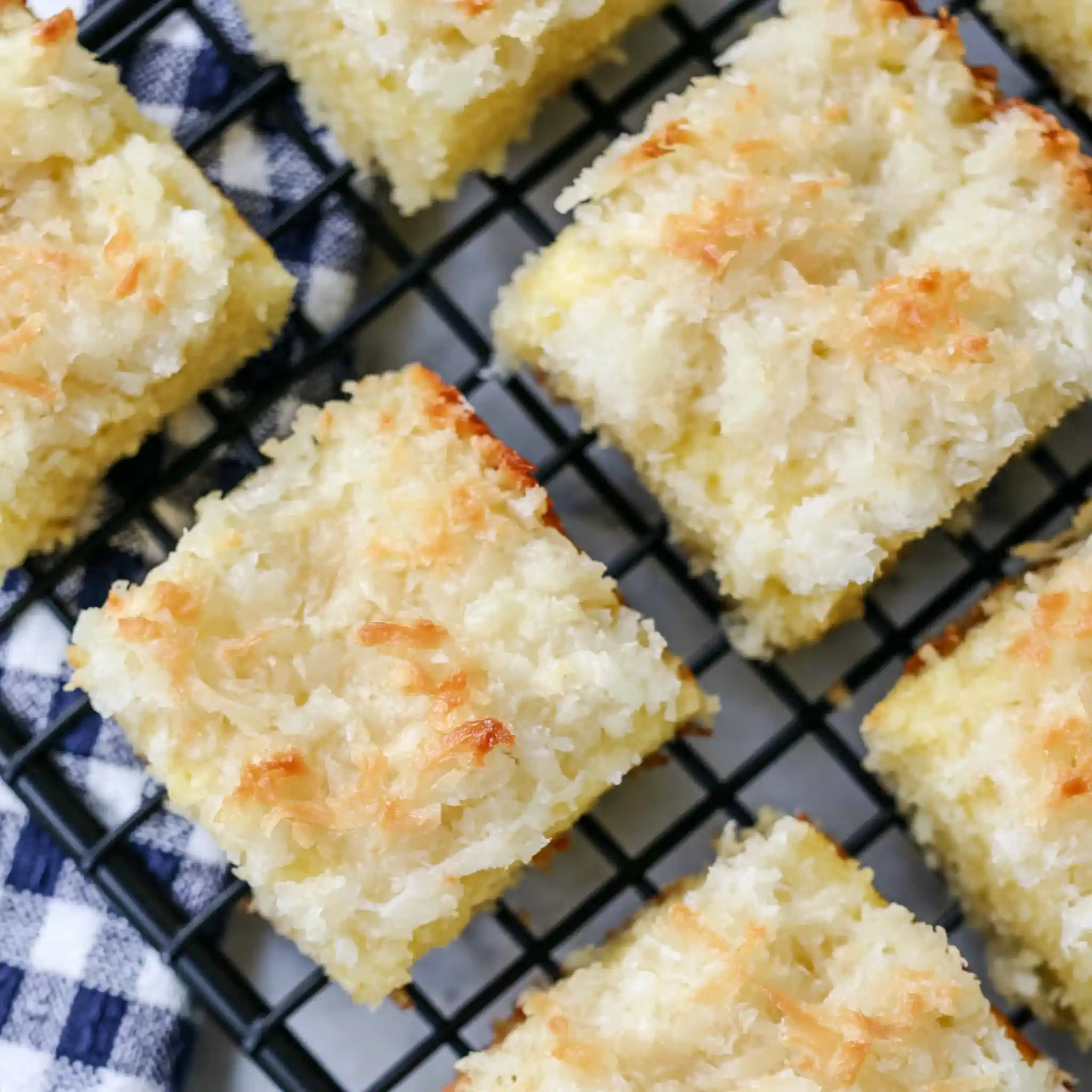
Pineapple Coconut Squares bring buttery shortbread, juicy pineapple, and sweet coconut together in one simple dessert bar. These Pineapple Coconut Squares taste bright, rich, and slightly chewy, yet they use basic pantry ingredients and a quick baking method. Because the base bakes first, it stays tender and crisp under the soft pineapple coconut layer. Meanwhile, the topping turns golden around the edges and gives every bite a sunny tropical flavor. This recipe works beautifully for potlucks, spring brunches, summer cookouts, or anytime you want a homemade treat that cuts neatly into squares.
Story
I first think of Pineapple Coconut Squares when I want a dessert that feels cheerful without needing frosting, layers, or decorating. The buttery base reminds me of classic shortbread cookies, while the pineapple topping brings that sweet-tart flavor that makes each bite fresh. Also, coconut adds a light chew and a toasted finish, so the squares taste more special than the short ingredient list suggests. Pineapple Coconut Squares fit well on a cookie tray, yet they also work as a plated dessert with whipped cream. Since the recipe makes 16 bars, Pineapple Coconut Squares give you just enough for sharing. Plus, these easy coconut squares cool well, slice cleanly, and store nicely in the refrigerator.
Ingredients
For the shortbread base, use 1 1/4 cups all-purpose flour, 1/2 cup butter, and 1/4 cup granulated sugar; add 1 to 2 extra tablespoons butter only if the mixture feels too dry. For the pineapple coconut topping, use 1 tablespoon butter, 1/2 cup granulated sugar, 1 room-temperature egg, 1 can unsweetened crushed pineapple, 14 ounces, drained very well and squeezed to remove extra liquid, and 1/2 cup shredded or flaked coconut, divided. This pineapple dessert works best when the pineapple loses most of its juice before baking, because too much moisture can soften the shortbread base.
Step-by-Step Instructions
These Pineapple Coconut Squares come together in two simple stages: first, you bake the shortbread base until lightly set; then, you add the pineapple coconut topping and bake again until golden. Before you begin, heat the oven to 350°F and line an 8-inch square baking pan with parchment paper, or lightly grease the pan. Parchment helps you lift the cooled bars out neatly, which makes cutting easier. Also, let the egg sit at room temperature for 45 to 60 minutes, because it blends better into the butter and sugar. Finally, drain the crushed pineapple thoroughly, then squeeze out extra liquid with clean hands.
Preparing the Ingredients
Start by measuring the flour, butter, and sugar for the shortbread base, then keep them cold enough to crumble but soft enough to blend. Next, place the flour, 1/2 cup butter, and 1/4 cup sugar in a medium bowl. Cut the butter into the flour mixture with a pastry blender, fork, or your fingertips until it looks like coarse crumbs. After that, press the mixture gently into the prepared pan in an even layer. Do not pack it too hard, because a firm press can make the base dense. Then, bake the base for 15 minutes while you prepare the topping.
Cooking Instructions
While the base bakes, cream 1 tablespoon butter with 1/2 cup sugar and the room-temperature egg in a medium bowl until smooth. Then, fold in the well-drained pineapple and half of the coconut. Stir until the topping looks evenly mixed, but do not beat it heavily. After the base finishes its first bake, spread the pineapple mixture evenly over the hot shortbread. Next, sprinkle the remaining coconut over the top for a lightly toasted finish. Return the pan to the oven and bake for 25 to 30 minutes, or until the topping sets and the coconut turns golden. Cool completely before cutting into 16 squares.
Tips for Perfect Results
The most important step for Pineapple Coconut Squares comes before the topping ever reaches the oven: drain the pineapple well. If the pineapple carries too much juice, the topping may taste watery and the base may soften. Additionally, cut the butter evenly into the flour so the shortbread bakes with a tender crumb. Since ovens can run hot or cool, check the bars near the 25-minute mark during the second bake. The edges should look set, and the coconut should show light golden color. For the cleanest slices, chill the cooled pan briefly before cutting.
Common Mistakes to Avoid
Do not skip the first bake for the shortbread base, because that step gives Pineapple Coconut Squares their cookie-like bottom layer. Also, avoid pouring pineapple juice into the topping, even if the mixture looks like it needs more liquid. The fruit releases moisture as it bakes, so extra juice can make the bars messy. Another common mistake involves cutting the bars too soon. Although the aroma makes waiting hard, warm bars can crumble and smear. Instead, cool them completely, then slice with a sharp knife. Finally, avoid overmixing the topping once you add the pineapple and coconut.
Pro Tips for Better Flavor
For a richer flavor, use good-quality butter and unsweetened coconut, since the pineapple and sugar already add sweetness. Also, toast a spoonful of the coconut before sprinkling it on top for a deeper nutty note. If you want a brighter finish, add a small pinch of fine salt to the shortbread base. Additionally, you can add 1/2 teaspoon vanilla extract to the topping for a softer bakery-style flavor. These tropical dessert squares also taste wonderful with a little lime zest stirred into the pineapple filling. However, keep the zest light so it supports the pineapple rather than taking over.
Serving and Storage
Serve Pineapple Coconut Squares only after they cool completely, because the filling needs time to settle. For casual gatherings, cut them into 16 neat squares and arrange them on a platter. For a dessert plate, add a spoonful of whipped cream, a few fresh pineapple pieces, or a dusting of powdered sugar. Since the bars have a buttery base and fruit filling, they taste great slightly chilled. They also pair nicely with coffee, iced tea, or a light brunch menu. Because they hold their shape well, these baked pineapple squares travel nicely in a covered container.
How to Serve
For the best texture, remove Pineapple Coconut Squares from the refrigerator about 10 minutes before serving. This short rest softens the butter in the shortbread base and brings out the pineapple flavor. If you serve them at a party, place parchment between layers so the tops stay neat. Also, use a thin spatula to lift each square from the pan without breaking the base. For a more polished look, trim the edges before cutting the center into even squares. Then, sprinkle a small pinch of coconut over the platter for a simple finishing touch.
How to Store Leftovers
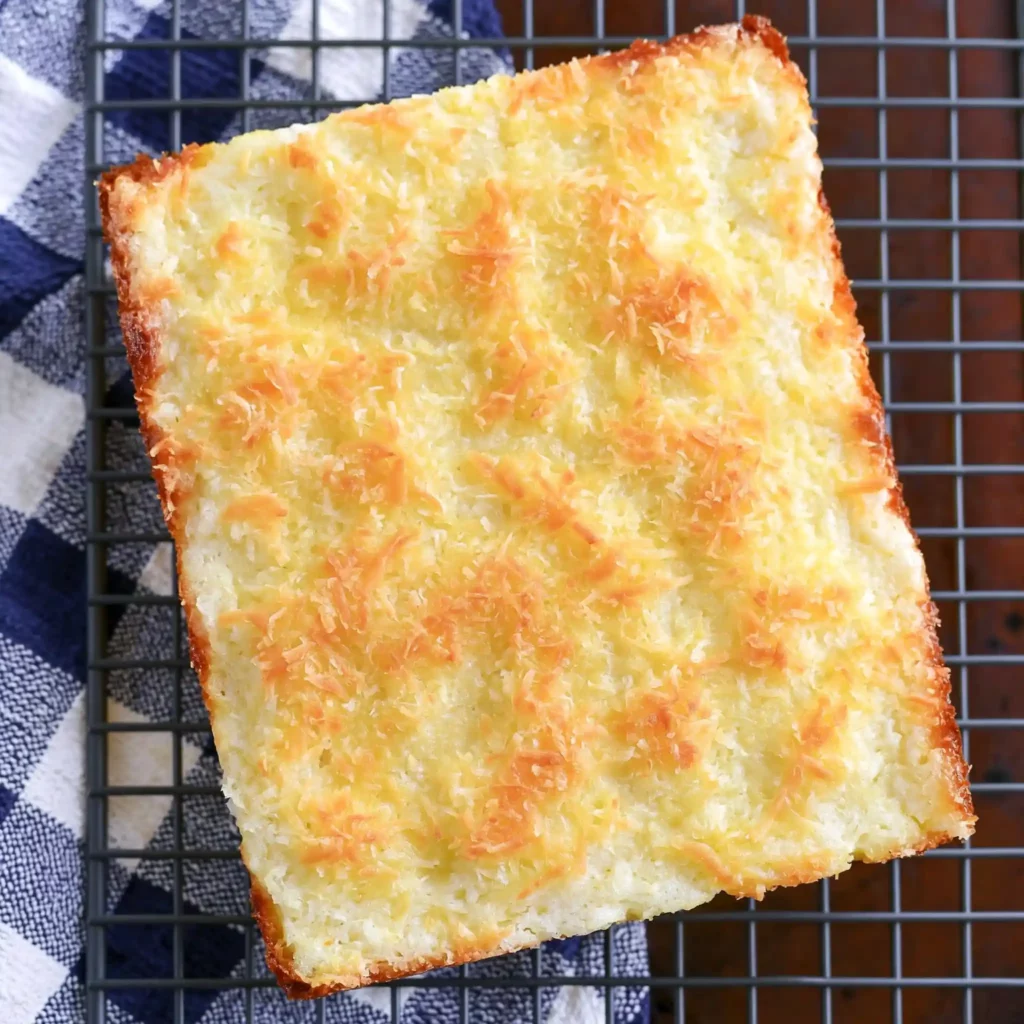
Store leftover Pineapple Coconut Squares in the refrigerator in an airtight container for 4 to 5 days. Place parchment or wax paper between layers so the topping does not stick. You can also cover the baking pan tightly with foil after the bars cool completely. For longer storage, freeze the full slab or individual squares for up to 3 months. First, wrap the cooled bars in plastic wrap, then add foil or place them in a freezer-safe container. Thaw them overnight in the refrigerator or at room temperature. For best texture, serve them chilled or slightly cool.
Conclusion
Pineapple Coconut Squares prove that a simple dessert can still taste bright, buttery, and memorable. With a tender shortbread base, a sweet pineapple filling, and a coconut topping that turns golden in the oven, these bars bring tropical flavor without extra work. They slice well, store well, and fit almost any occasion, from a weekday treat to a holiday dessert tray. Try them the next time you want a homemade bar recipe that feels sunny, nostalgic, and easy to share.
Discover more delicious recipes by following me on Facebook and Pinterest.
Frequently Asked Questions
Can I use sweetened coconut in Pineapple Coconut Squares?
Yes, you can use sweetened coconut, but the bars will taste sweeter. Since the topping already includes sugar and pineapple, unsweetened coconut gives better balance. However, sweetened coconut still works when that is what you have on hand. To keep the flavor from becoming too sugary, you can reduce the topping sugar by 1 to 2 tablespoons. Also, watch the top near the end of baking, because sweetened coconut may brown faster.
Why do my Pineapple Coconut Squares taste soggy?
Soggy Pineapple Coconut Squares usually come from pineapple that still holds too much juice. Drain the crushed pineapple in a fine-mesh strainer, then squeeze it firmly with clean hands before adding it to the filling. Also, bake the shortbread base before adding the topping, because this helps protect the bottom layer. Finally, cool the bars fully before cutting, since the filling firms as it rests.
Can I freeze Pineapple Coconut Squares?
Yes, Pineapple Coconut Squares freeze well for up to 3 months. Cool them completely first, then wrap them tightly to protect the texture and flavor. If you freeze individual squares, place parchment between the layers so they do not stick together. Thaw the bars in the refrigerator overnight or place them at room temperature until soft enough to serve. For the best flavor, enjoy them within the first month.
Print
Pineapple Coconut Squares
- Total Time: 1 hour
- Yield: 16 squares 1x
Description
Pineapple Coconut Squares feature a buttery shortbread base, a sweet crushed pineapple filling, and a golden coconut topping. These easy dessert bars are perfect for parties, brunches, potlucks, and make-ahead treats.
Ingredients
- 1 1/4 cups all-purpose flour
- 1/2 cup butter, plus 1 to 2 tablespoons more if the base feels too dry
- 1/4 cup granulated sugar
- 1 tablespoon butter
- 1/2 cup granulated sugar
- 1 large egg, room temperature
- 1 can unsweetened crushed pineapple, 14 ounces, drained very well and squeezed to remove excess liquid
- 1/2 cup shredded or flaked coconut, divided
Instructions
- Preheat the oven to 350°F. Line an 8-inch square baking pan with parchment paper or lightly grease the pan.
- In a medium bowl, combine the flour, 1/2 cup butter, and 1/4 cup sugar. Cut the butter into the dry ingredients with a pastry blender, fork, or fingertips until the mixture resembles coarse crumbs.
- Press the shortbread mixture gently and evenly into the prepared pan. Bake for 15 minutes.
- While the base bakes, cream 1 tablespoon butter with 1/2 cup sugar and the room-temperature egg in a medium bowl until smooth.
- Fold in the well-drained crushed pineapple and half of the coconut. Mix until evenly combined.
- Spread the pineapple coconut topping evenly over the baked shortbread base.
- Sprinkle the remaining coconut over the top.
- Return the pan to the oven and bake for 25 to 30 minutes, or until the topping sets and the coconut turns lightly golden.
- Cool completely in the pan before cutting into 16 squares.
Notes
- Remove the egg from the refrigerator 45 to 60 minutes before baking so it blends smoothly into the topping.
- Drain the crushed pineapple very well, then squeeze out extra liquid with clean hands to prevent soggy bars.
- Store the cooled squares in an airtight container in the refrigerator for 4 to 5 days, with parchment or wax paper between layers.
- Freeze cooled squares for up to 3 months. Wrap tightly in plastic wrap and foil, or place in a freezer-safe container with parchment between layers.
- Thaw frozen squares overnight in the refrigerator or at room temperature before serving.
- Prep Time: 15 minutes
- Cook Time: 45 minutes
- Category: Dessert
- Method: Baking
- Cuisine: American
Nutrition
- Serving Size: 1 square
- Calories: 142
- Sugar: 9
- Sodium: 61
- Fat: 7
- Saturated Fat: 4
- Unsaturated Fat: 3
- Trans Fat: 0
- Carbohydrates: 17
- Fiber: 1
- Protein: 1
- Cholesterol: 27